Types, Uses, Buying Guide & Care
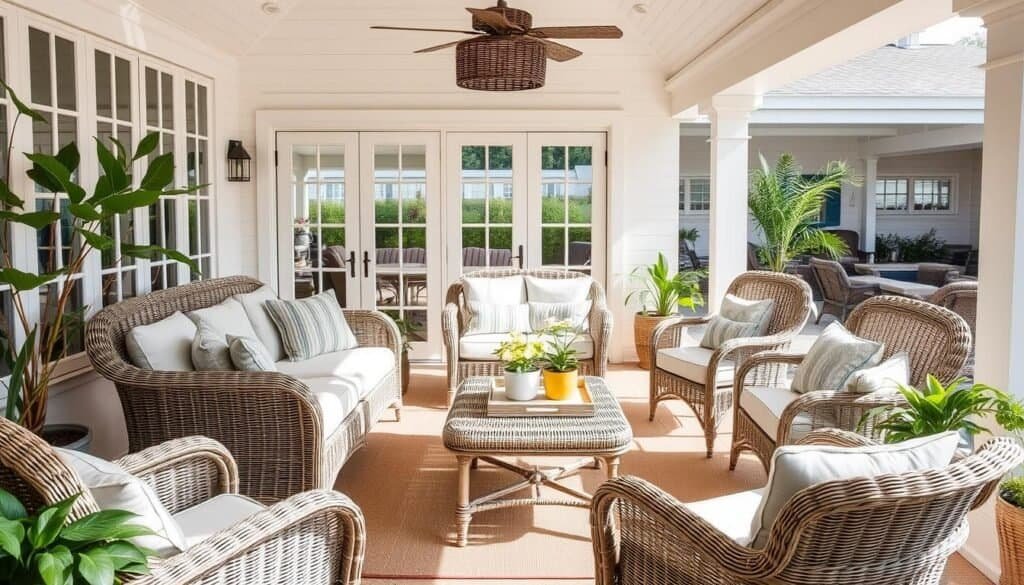
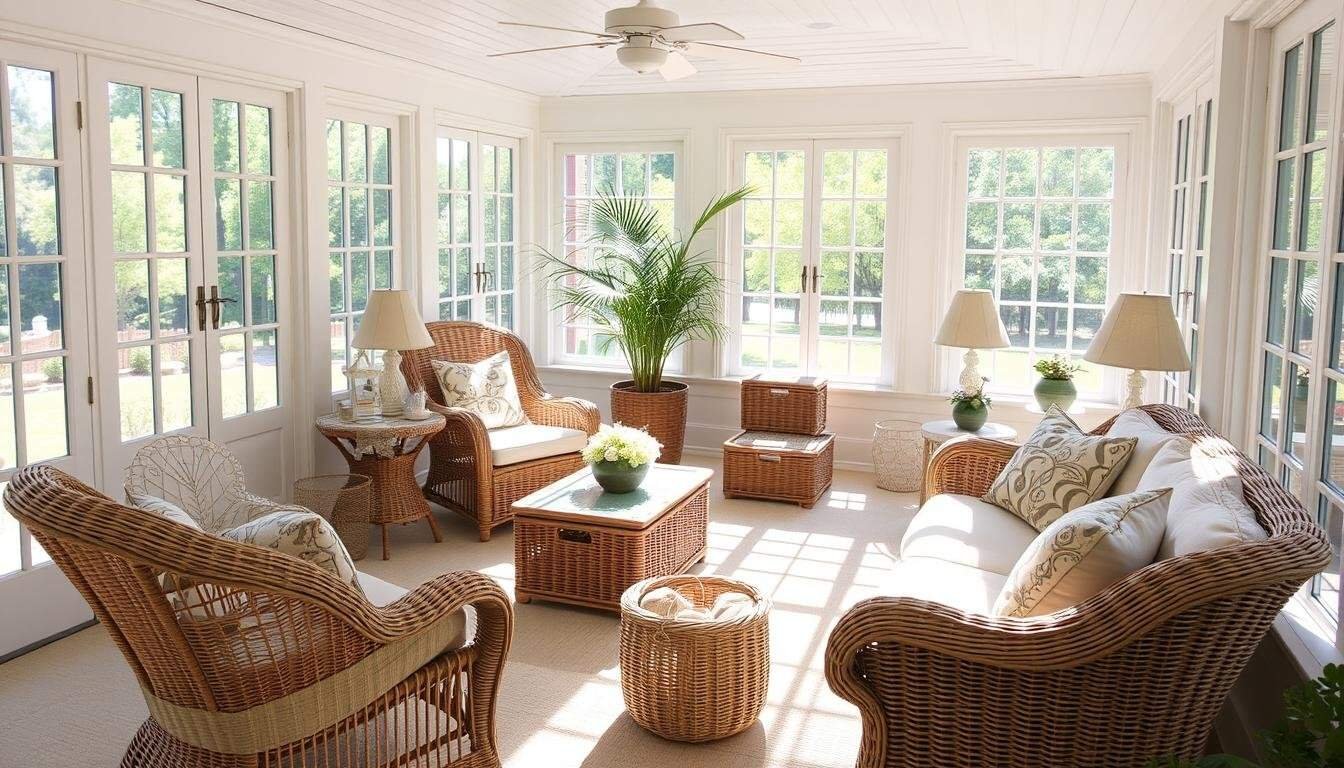
Wicker furniture has graced homes for centuries with its distinctive texture, lightweight nature, and versatile appeal. From elegant Victorian sunrooms to modern coastal retreats, wicker continues to evolve while maintaining its timeless charm. This comprehensive guide explores everything you need to know about wicker furniture—its rich history, diverse materials, practical applications, and essential care techniques to help you make informed decisions for your home.
The Rich History of Wicker Furniture
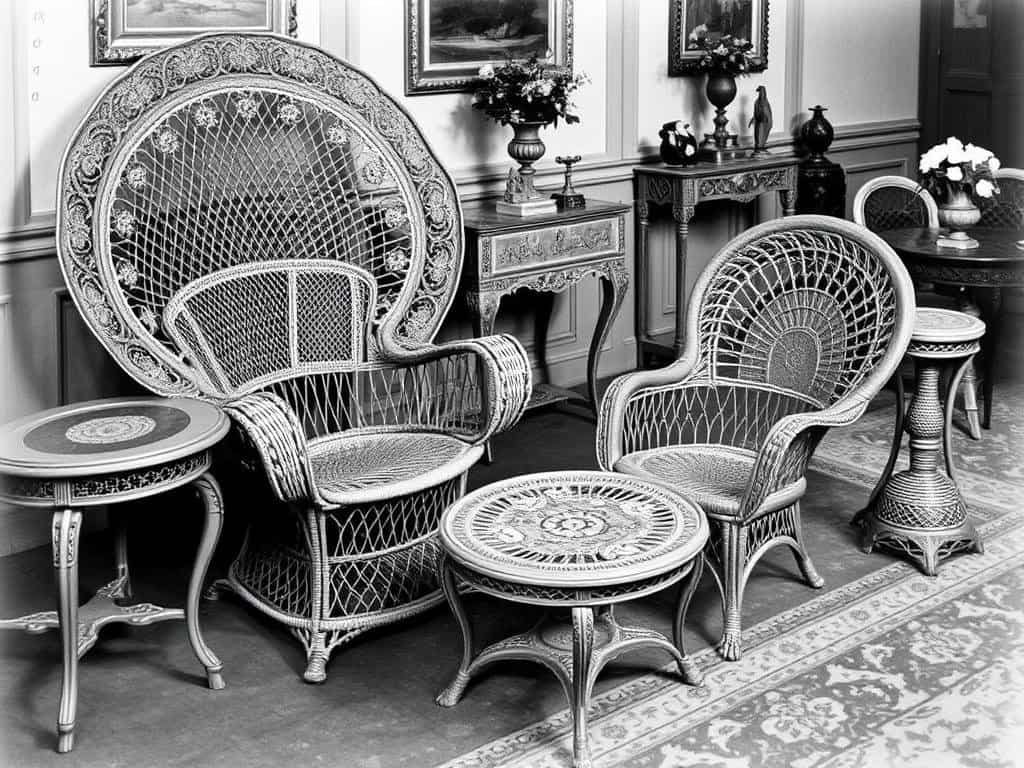
Wicker furniture dates back to ancient Egypt, where craftsmen wove reeds from the Nile River into functional pieces. Archaeological discoveries have revealed wicker items in the tomb of Tutankhamun, demonstrating its historical significance. The craft spread through Europe during the Roman Empire and experienced a renaissance during the Victorian era when rattan imports from Southeast Asia became widely available.
The 19th century saw wicker furniture become a symbol of leisure and prosperity in America, with companies like Heywood-Wakefield mass-producing iconic designs. Today, wicker furniture continues to evolve with new materials and manufacturing techniques while maintaining its distinctive aesthetic appeal.
Types of Wicker Furniture Materials
Understanding the different materials used in wicker furniture is essential for making informed purchasing decisions. Each material offers unique characteristics in terms of durability, appearance, and maintenance requirements.
Natural Wicker Materials
Rattan
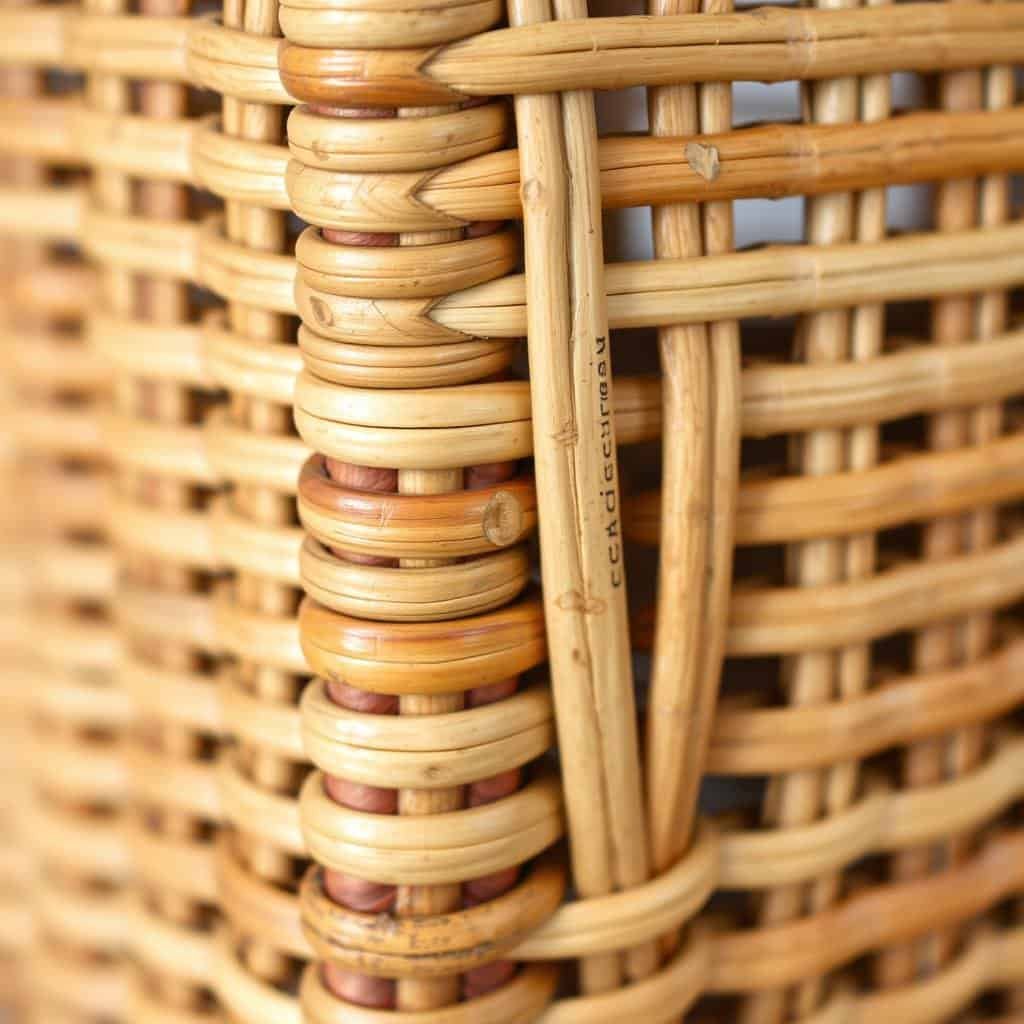
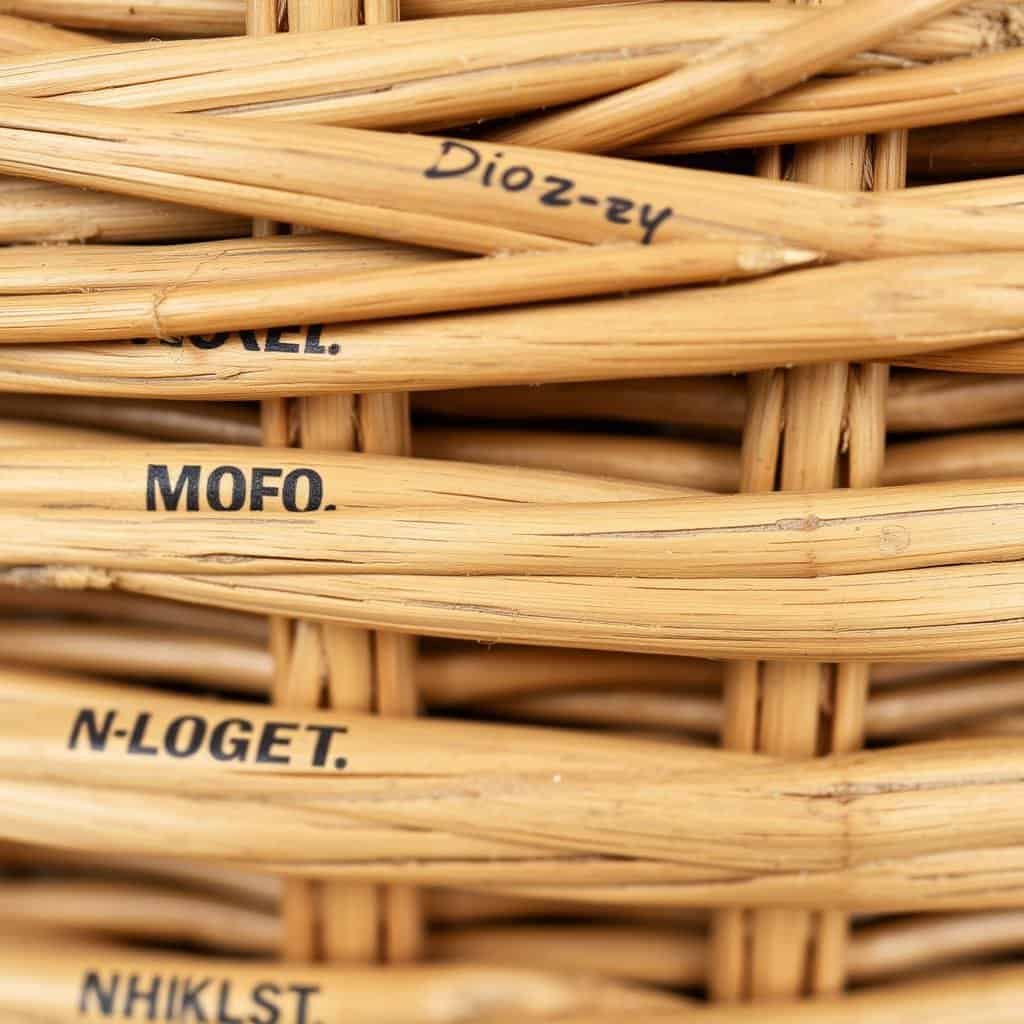
Rattan is a vine-like palm that grows in Southeast Asian forests. Its solid core makes it exceptionally strong yet flexible, ideal for furniture frames. Rattan can be bent and shaped when steamed, allowing for curved designs. It features a warm, honey-colored finish that darkens beautifully with age.
Bamboo
Though often confused with rattan, bamboo is a hollow grass with distinctive joints. It provides excellent strength and a distinctive aesthetic with its natural nodes. Bamboo is typically used for accent pieces or combined with other wicker materials.
Reed
Reed is derived from tall wetland grasses and offers excellent flexibility. It’s commonly used for the woven elements of furniture rather than structural components. Reed creates tight, intricate weaving patterns and is often combined with rattan frames.
Willow
Willow branches have been used in wicker crafting for centuries. They create rustic, organic-looking furniture with distinctive character. Willow is highly sustainable as it regrows quickly after harvesting, making it an environmentally friendly choice.
Synthetic Wicker Materials
Resin Wicker
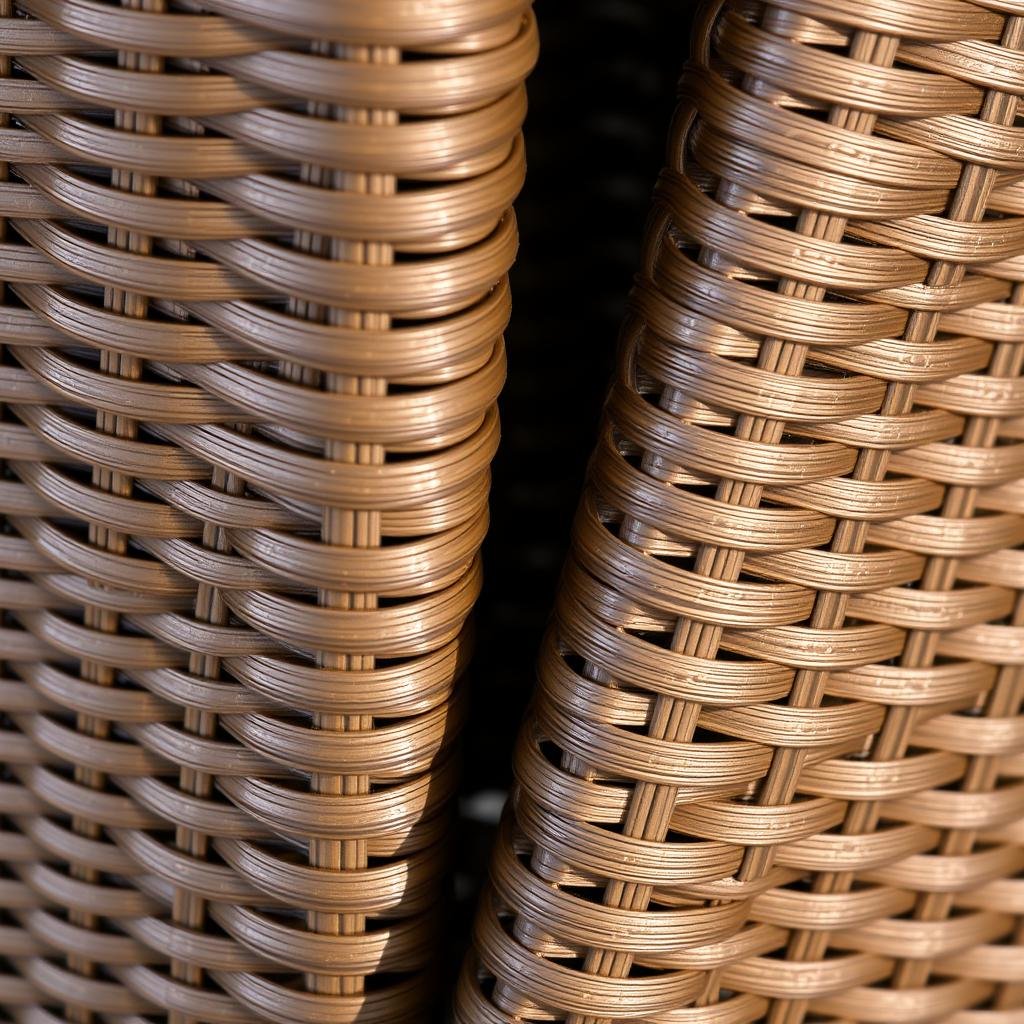
Also known as all-weather wicker, resin wicker is made from synthetic fibers like polyethylene. It’s designed specifically for outdoor use, offering exceptional resistance to UV rays, moisture, and temperature fluctuations. Modern manufacturing techniques create remarkably realistic textures that mimic natural materials.
Vinyl and Plastic
These synthetic options provide affordable alternatives to natural wicker. They’re typically used for casual furniture and offer good resistance to moisture. While less expensive, they may not have the same aesthetic appeal or longevity as higher-quality synthetic or natural materials.
Find Your Perfect Wicker Style
Now that you understand the different wicker materials, explore our curated collection to find pieces that match your specific needs and aesthetic preferences.
Explore Wicker Furniture Collections
Natural vs. Synthetic Wicker: A Comparison
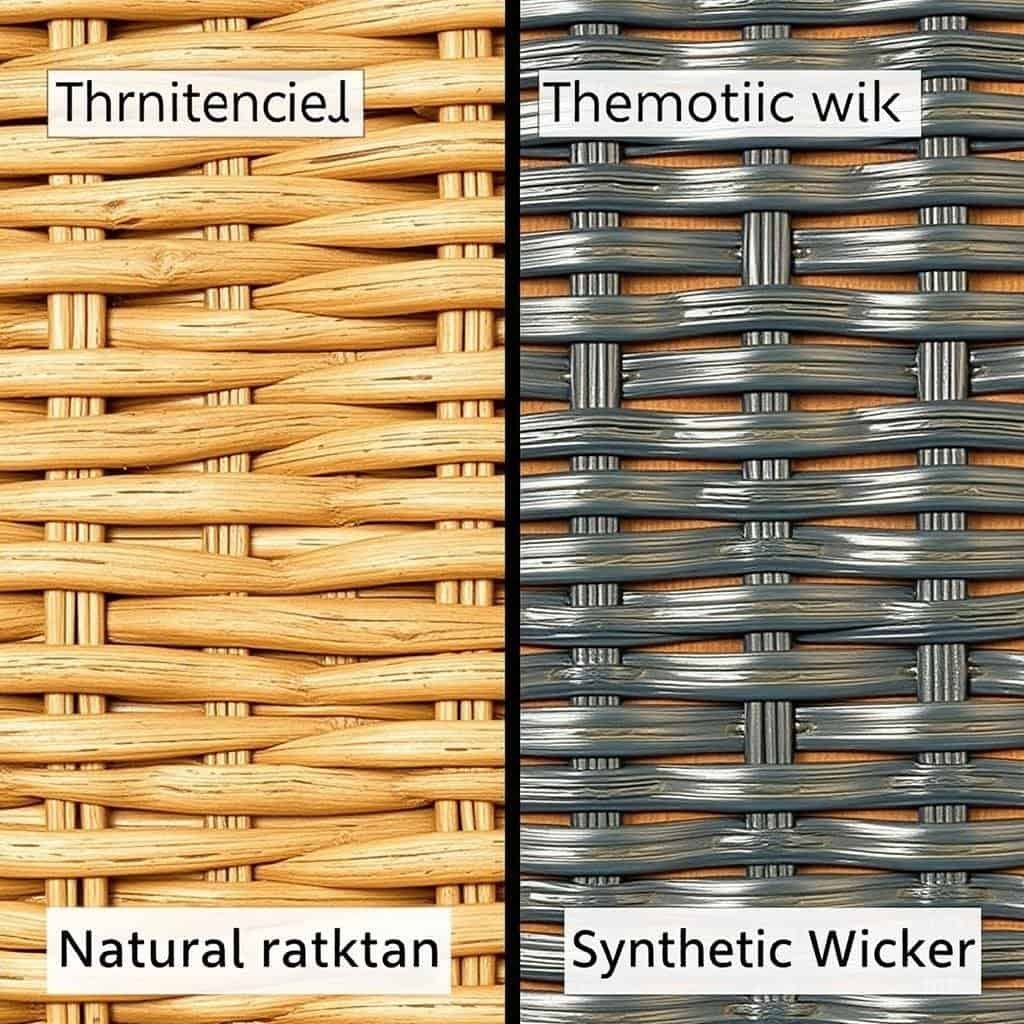
| Feature | Natural Wicker | Synthetic Wicker |
| Durability | Good indoors; limited outdoors | Excellent in all environments |
| Weather Resistance | Poor; susceptible to moisture damage | Excellent; resistant to rain, sun, and temperature changes |
| Appearance | Authentic, organic texture with natural variations | Increasingly realistic but more uniform |
| Maintenance | Regular cleaning and occasional treatment required | Minimal; simple cleaning with soap and water |
| Cost | Higher for quality pieces | Variable; high-end synthetic can be expensive |
| Sustainability | Renewable resource when responsibly harvested | Made from petroleum products; long lifespan |
Common Uses and Applications of Wicker Furniture
Indoor Wicker Furniture
Living Room
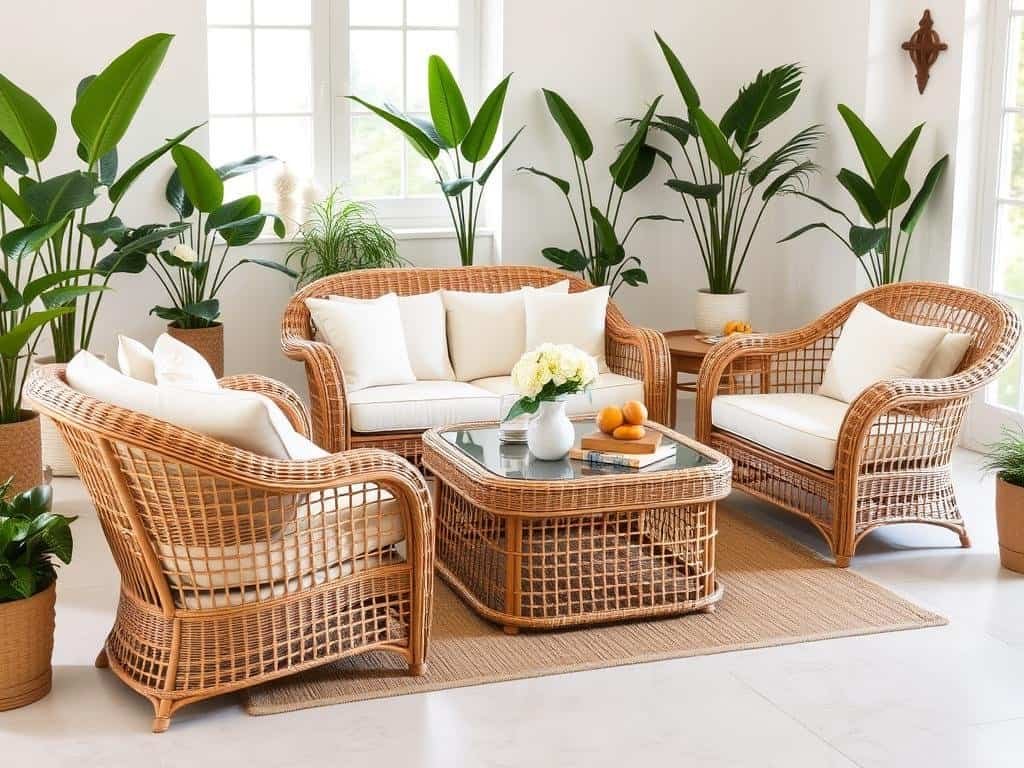
Wicker sofas, chairs, and coffee tables create a relaxed yet sophisticated atmosphere. Natural wicker brings texture and warmth to living spaces, while cushions add comfort and color. Popular styles include traditional sunroom sets and contemporary pieces with clean lines.
Dining Room
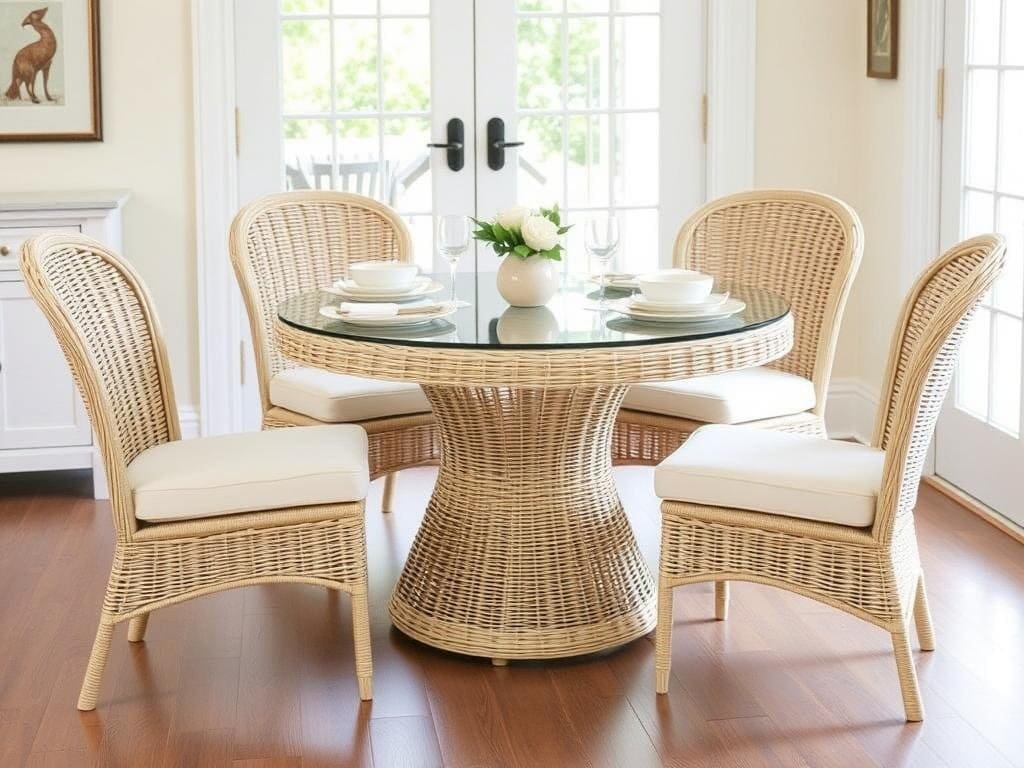
Wicker dining sets offer casual elegance perfect for breakfast nooks and dining rooms. Glass-topped tables paired with wicker chairs create an airy, inviting dining experience. Cushioned seats enhance comfort for extended meals and gatherings.
Bedroom
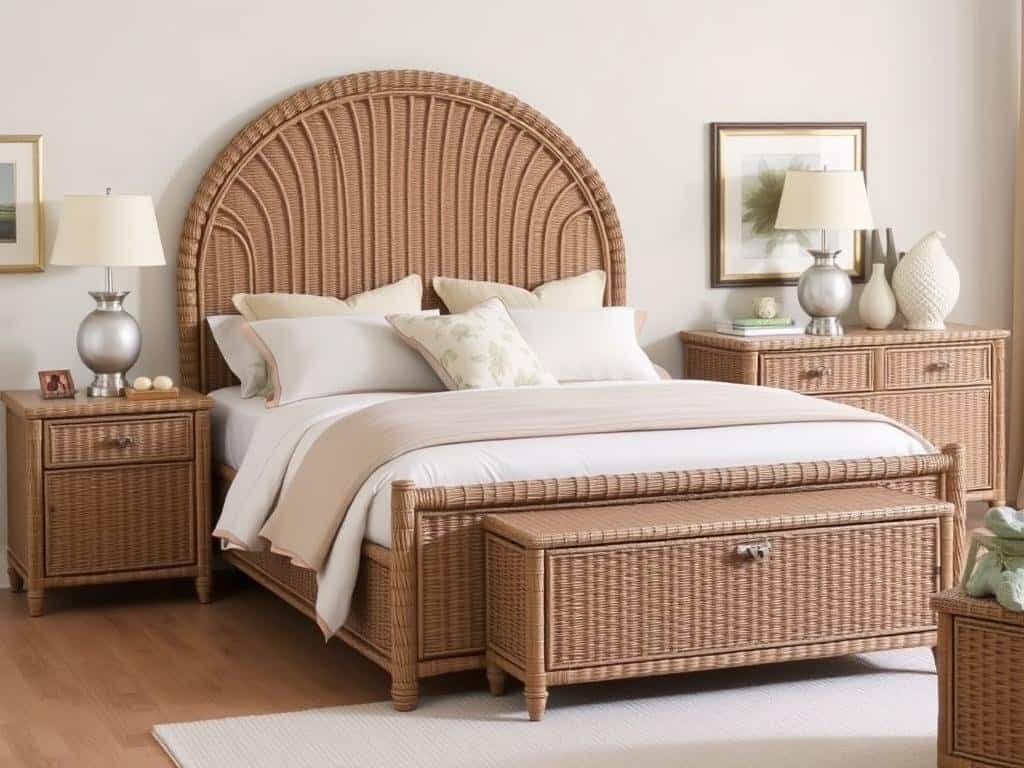
Wicker headboards, nightstands, and dressers bring natural texture to bedroom spaces. These pieces work particularly well in coastal, bohemian, and tropical design schemes. The lightweight appearance of wicker helps create an airy, relaxed sleeping environment.
Outdoor Wicker Furniture
Patio
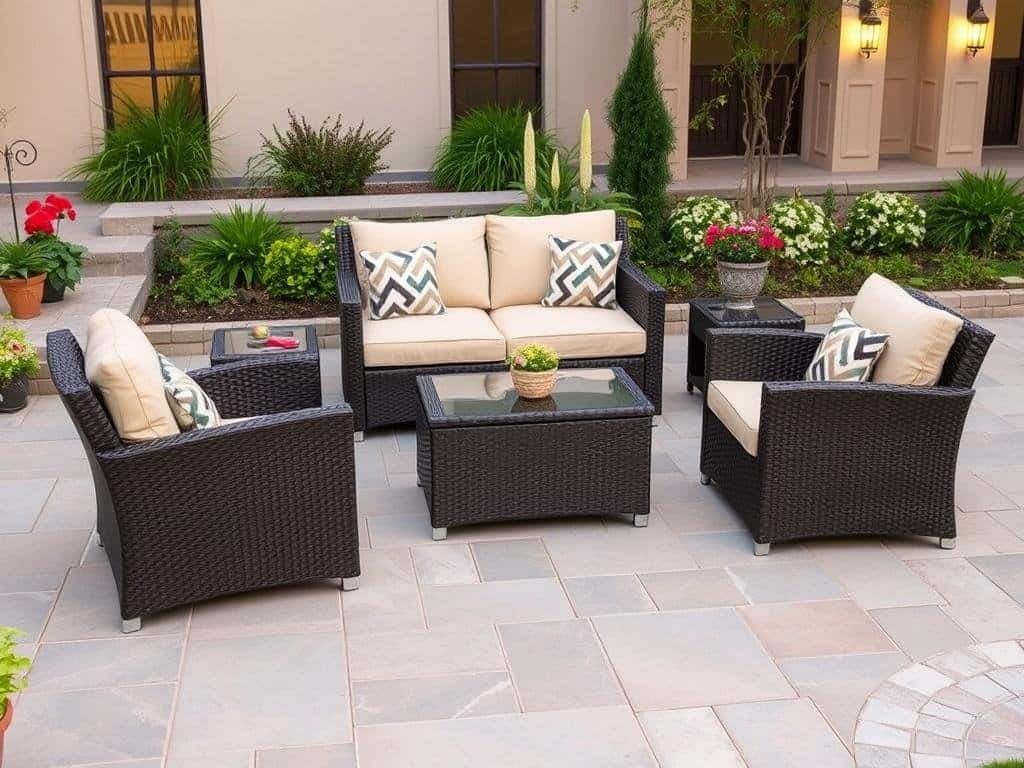
Weather-resistant synthetic wicker furniture creates comfortable outdoor living spaces. Sectional sofas, dining sets, and conversation groups extend your living area to the outdoors. Modern resin wicker withstands sun, rain, and temperature changes while maintaining its appearance.
Porch
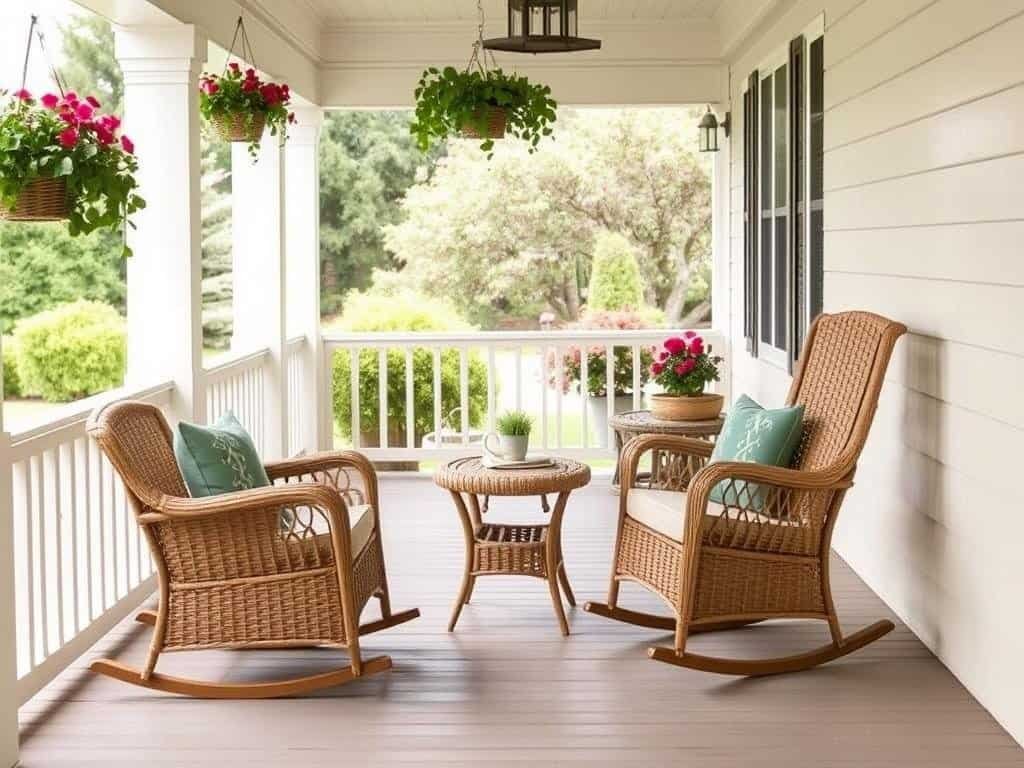
Wicker rocking chairs, swings, and small tables create inviting porch settings. These pieces offer the perfect spot for morning coffee or evening relaxation. Semi-protected environments like porches can accommodate both natural and synthetic wicker options.
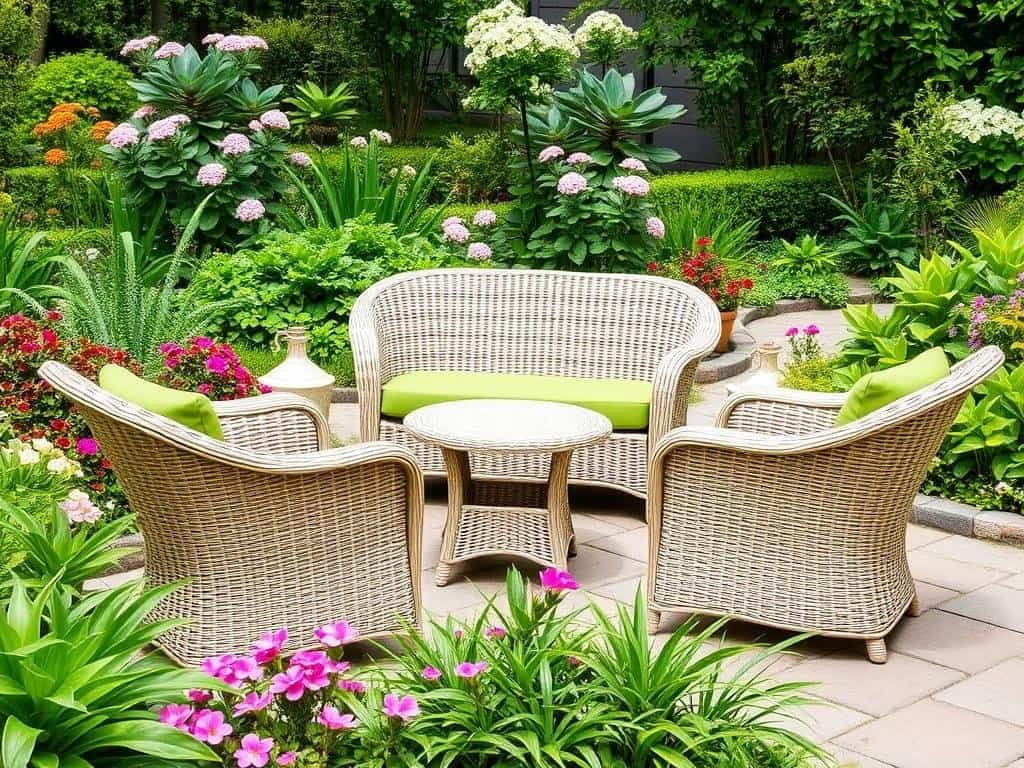
Garden
Wicker benches, bistro sets, and loungers create peaceful retreats within garden spaces. These pieces blend harmoniously with natural surroundings. Fully exposed locations require synthetic wicker that can withstand direct weather elements.
Commercial Applications
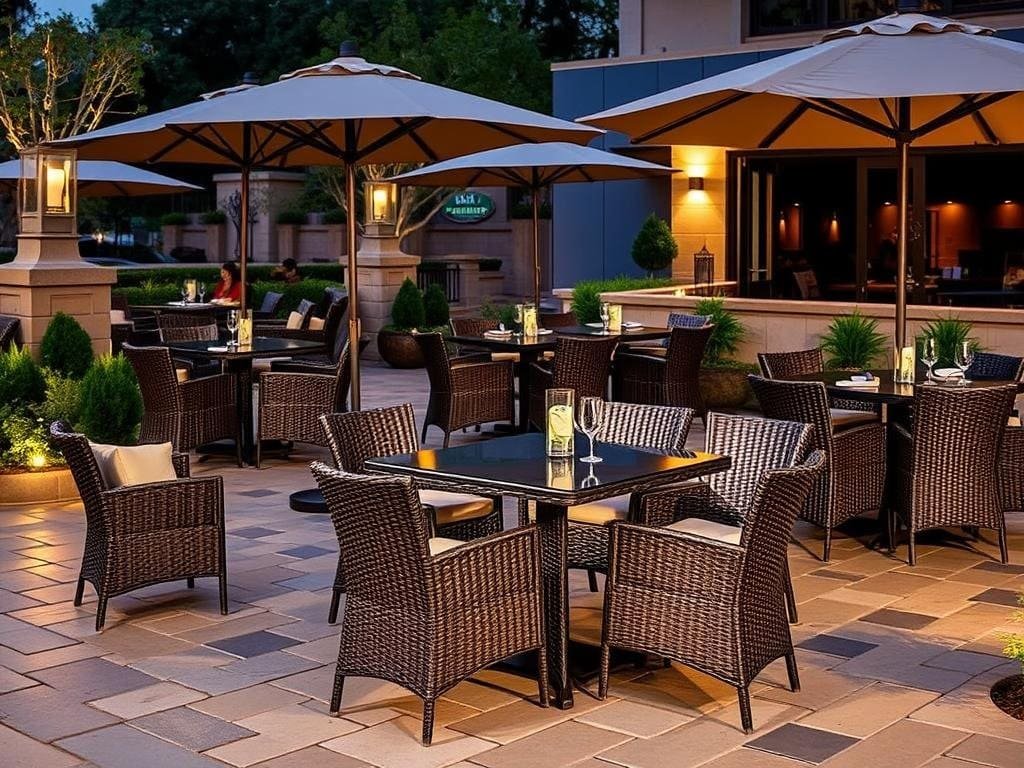
Restaurants
Commercial-grade wicker furniture creates inviting dining environments for restaurants, particularly those with outdoor seating or tropical themes. Durable synthetic options withstand heavy use while maintaining an upscale appearance.
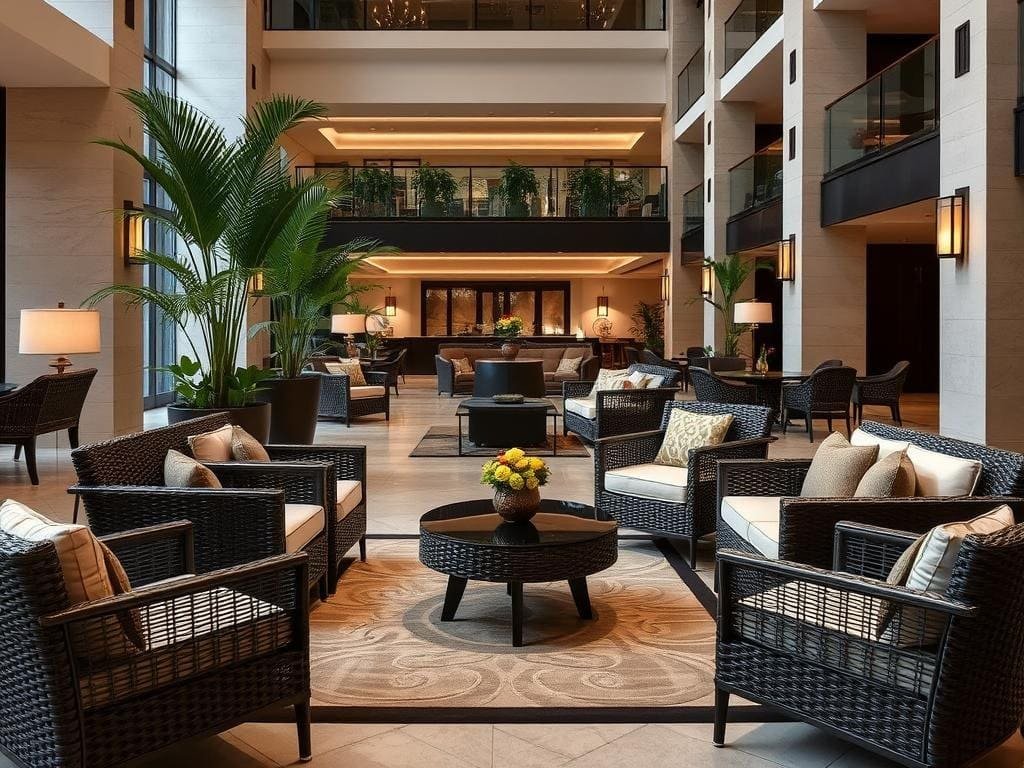
Hotels
Wicker furniture adds character to hotel lobbies, pool areas, and guest room balconies. High-end hospitality settings often feature custom wicker pieces that blend durability with distinctive design elements.

Resorts
Beach resorts and vacation properties extensively use weather-resistant wicker for poolside loungers, cabana seating, and outdoor dining areas. These pieces create a relaxed yet upscale vacation atmosphere.
Wicker Furniture Buying Guide
How to Choose Quality Wicker Furniture
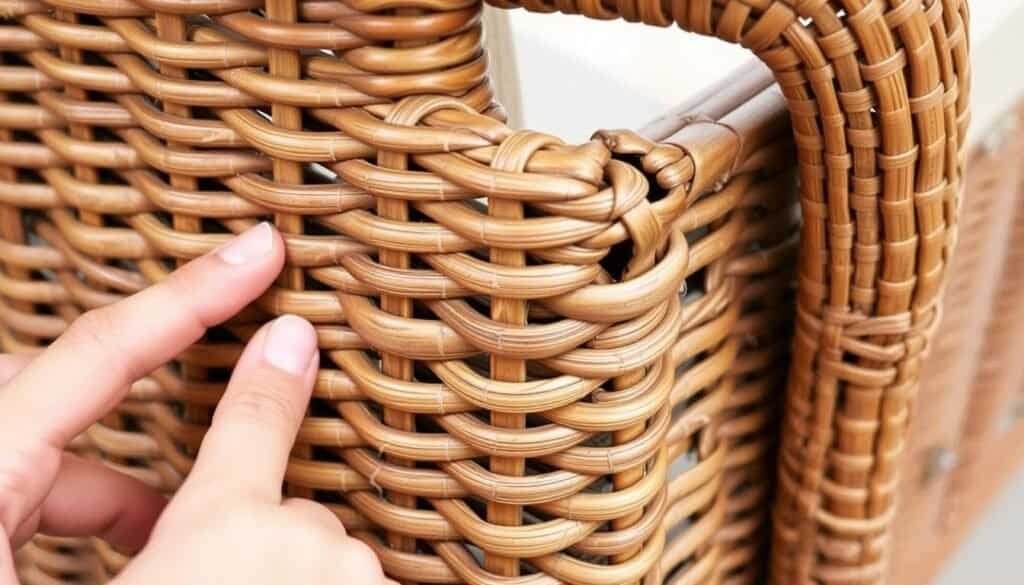
- Examine the weaving: Quality wicker furniture features tight, consistent weaving patterns without gaps or loose ends. The weaving should be uniform in tension and appearance.
- Check the frame: For natural wicker, look for solid rattan frames rather than particleboard or lightweight wood. For synthetic wicker, aluminum frames offer the best combination of durability and weight.
- Test the joints: Quality pieces have reinforced joints that don’t creak or flex when pressure is applied. Wrapped joints indicate superior craftsmanship.
- Assess the finish: Natural wicker should have an even, smooth finish without rough spots. Synthetic wicker should have consistent coloration without obvious molding lines.
- Evaluate cushions: Look for high-density foam that retains its shape and weather-resistant fabrics for outdoor pieces. Removable cushion covers simplify cleaning and replacement.
Size and Space Considerations
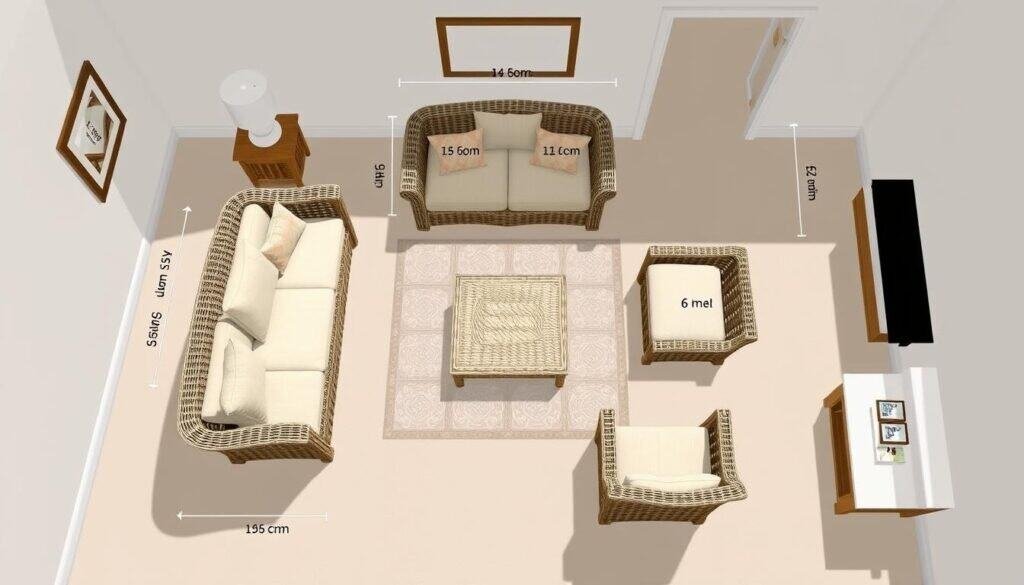
Before purchasing wicker furniture or Wicker storage Solutions, carefully measure your available space. Allow for adequate clearance around pieces for comfortable movement. Consider the scale of wicker furniture in relation to your room—oversized pieces can overwhelm small spaces, while undersized furniture may look insignificant in larger rooms.
For dining sets, ensure at least 36 inches of clearance around the table. For conversation areas, maintain 18-24 inches between seating and coffee tables. Remember that wicker furniture with cushions requires more space than its frame dimensions might suggest.
Style and Design Options
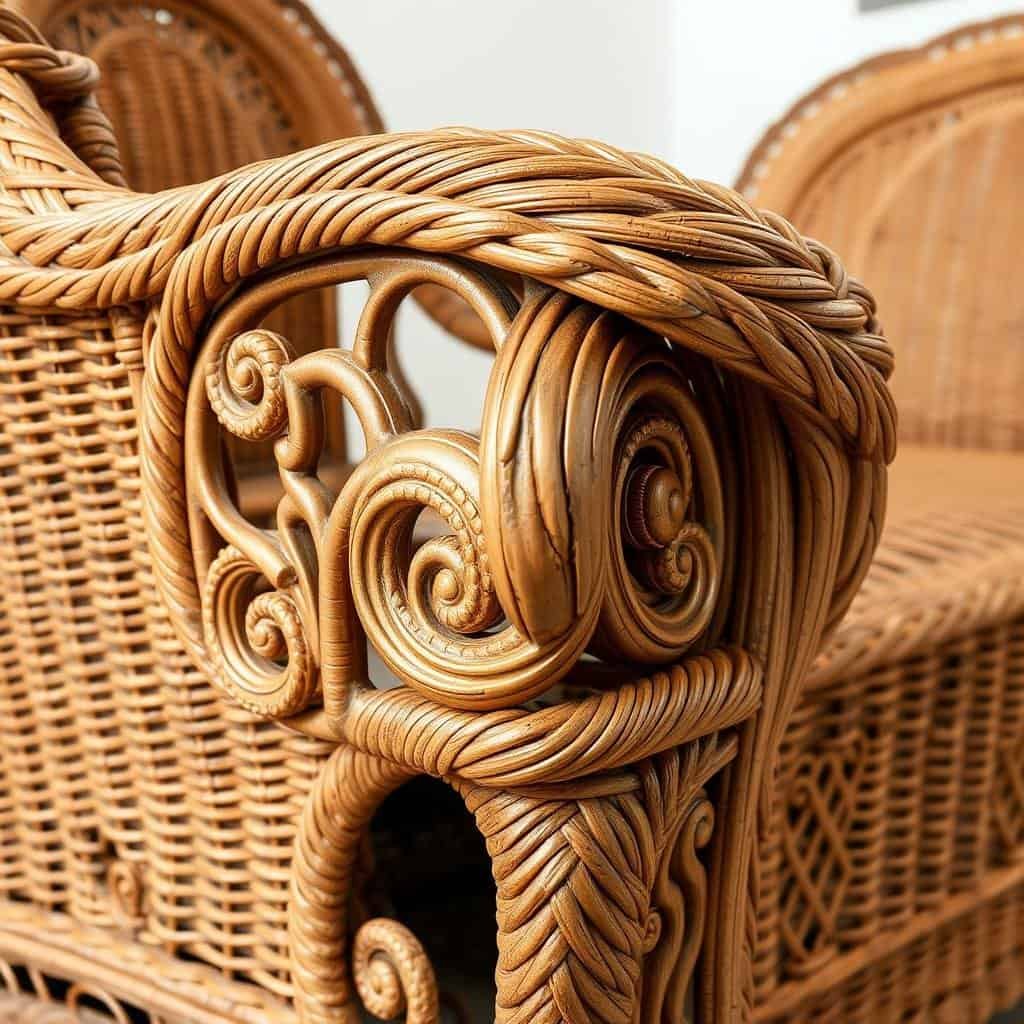
Traditional
Features ornate details, scrollwork, and classic silhouettes inspired by Victorian-era designs. Often finished in warm, natural tones with formal cushion fabrics.
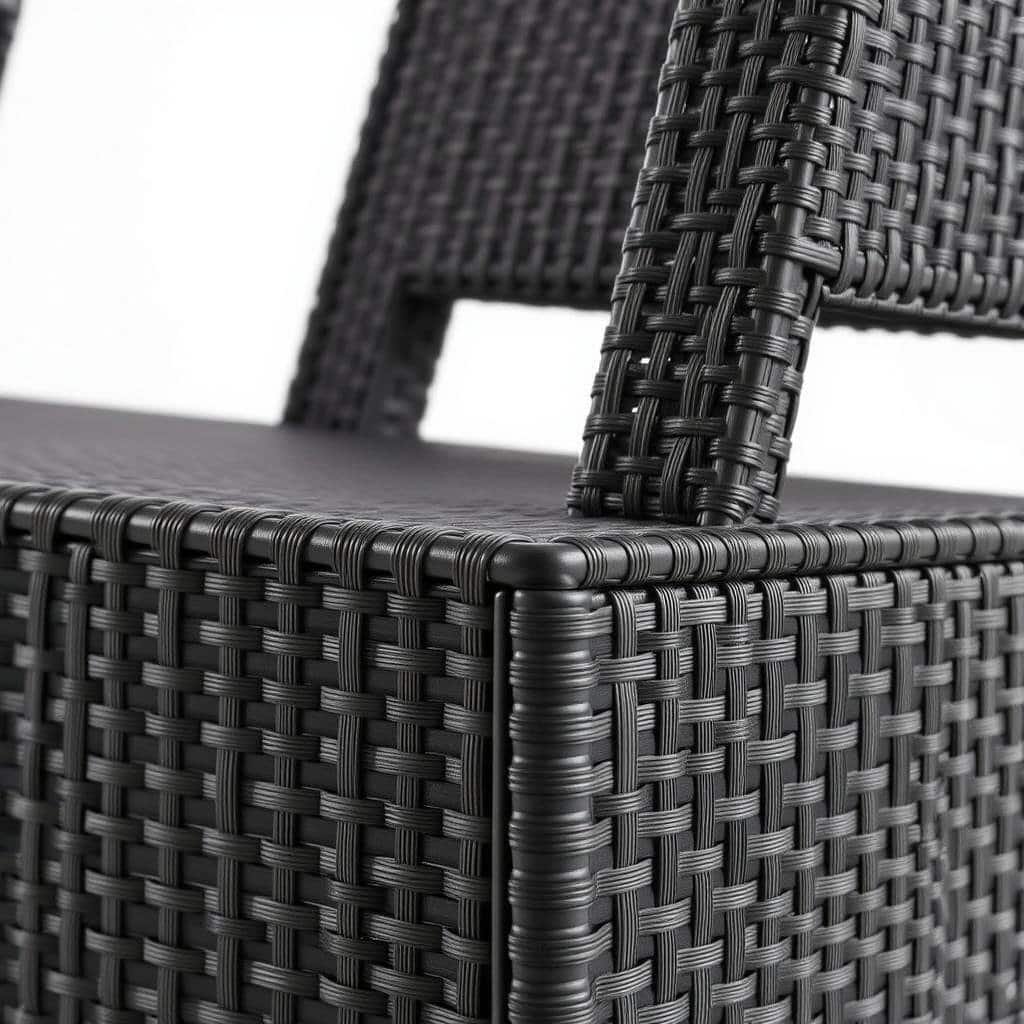
Contemporary
Emphasizes clean lines, geometric patterns, and minimalist aesthetics. Often features darker finishes or painted wicker with solid-colored cushions.
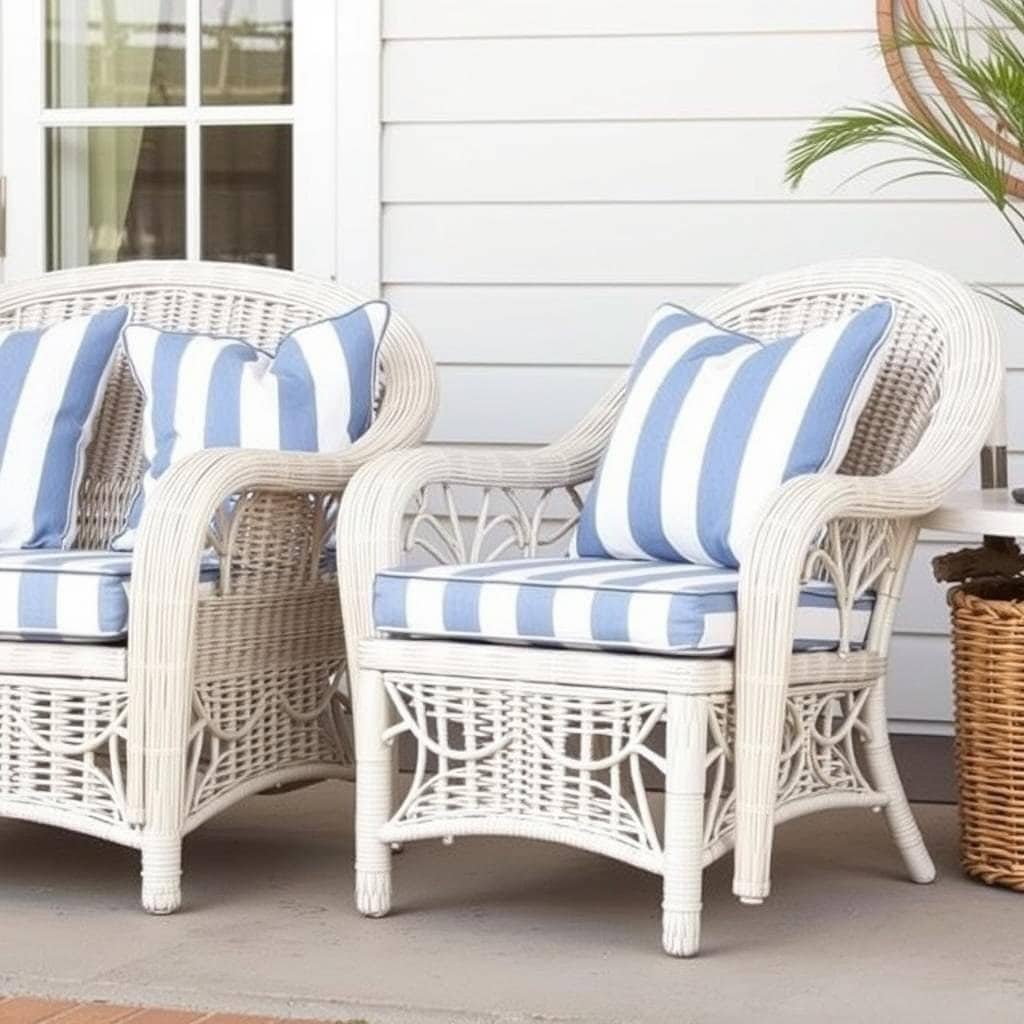
Coastal
Embraces light, airy aesthetics with whitewashed or natural finishes. Often features blue and white color schemes and relaxed, casual silhouettes.
Budget Considerations
Investment Pieces
- High-quality natural rattan with solid construction
- Premium synthetic materials with aluminum frames
- Custom cushions with high-performance fabrics
- Handcrafted details and unique designs
- Expected lifespan of 10+ years with proper care
Budget-Friendly Options
- Smaller accent pieces rather than full sets
- Standard synthetic wicker with steel frames
- Ready-made cushions in basic fabrics
- Simplified designs with less detailed weaving
- Expected lifespan of 3-5 years with normal use
Care and Maintenance for Wicker Furniture
Find different Wicker Care and Maintenance tips:
Cleaning Methods for Different Types of Wicker
Natural Wicker Cleaning
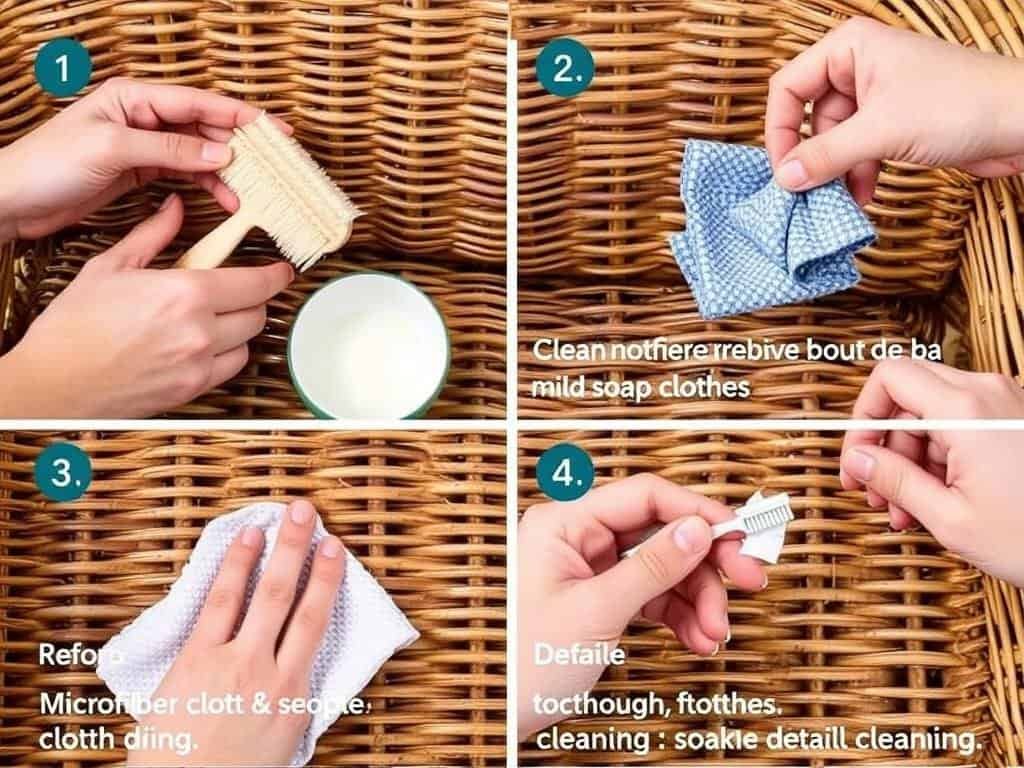
- Regular dusting: Use a soft brush attachment on your vacuum or a microfiber cloth to remove dust from crevices weekly.
- Gentle cleaning solution: Mix mild soap with warm water. Avoid soaking the wicker; instead, use a slightly damp cloth.
- Targeted cleaning: For stubborn spots, use a soft toothbrush with the soap solution, then wipe with a clean, damp cloth.
- Drying: Always allow natural wicker to dry completely in a well-ventilated area away from direct heat sources.
Synthetic Wicker Cleaning
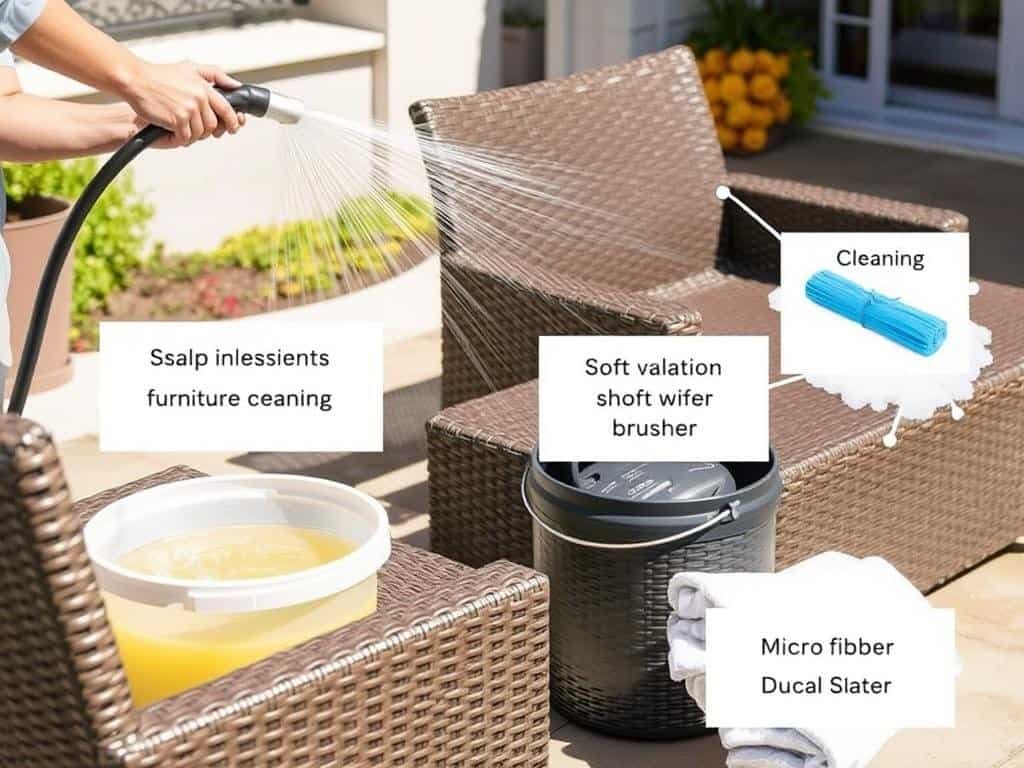
- Regular rinse: Hose down outdoor synthetic wicker periodically to remove dust and debris.
- Deep cleaning: Use mild soap and water solution with a soft brush for thorough cleaning 2-3 times per year.
- Pressure washing: Low-pressure settings can be used on synthetic wicker, keeping the nozzle at least 12 inches from the surface.
- Stain removal: For tough stains, a diluted bleach solution (10:1 water to bleach) can be used on most synthetic wicker.
Protection from Weather Elements
- Covers: Invest in quality furniture covers for outdoor wicker pieces during extended periods of non-use or severe weather. Look for breathable materials that prevent moisture buildup.
- Positioning: Place outdoor wicker furniture in locations that offer some protection from constant direct sunlight, which can fade both natural and synthetic materials over time.
- Seasonal storage: If possible, store outdoor wicker furniture in a dry, covered area during off-seasons or extreme weather conditions.
- Cushion care: Bring cushions indoors during rain or when not in use for extended periods. Consider water-resistant cushion covers for added protection.
- Protective treatments: Apply marine varnish or specialized wicker sealants to natural wicker used in semi-protected outdoor areas to enhance weather resistance.

Repair Tips for Damaged Wicker
Common Issues and Solutions
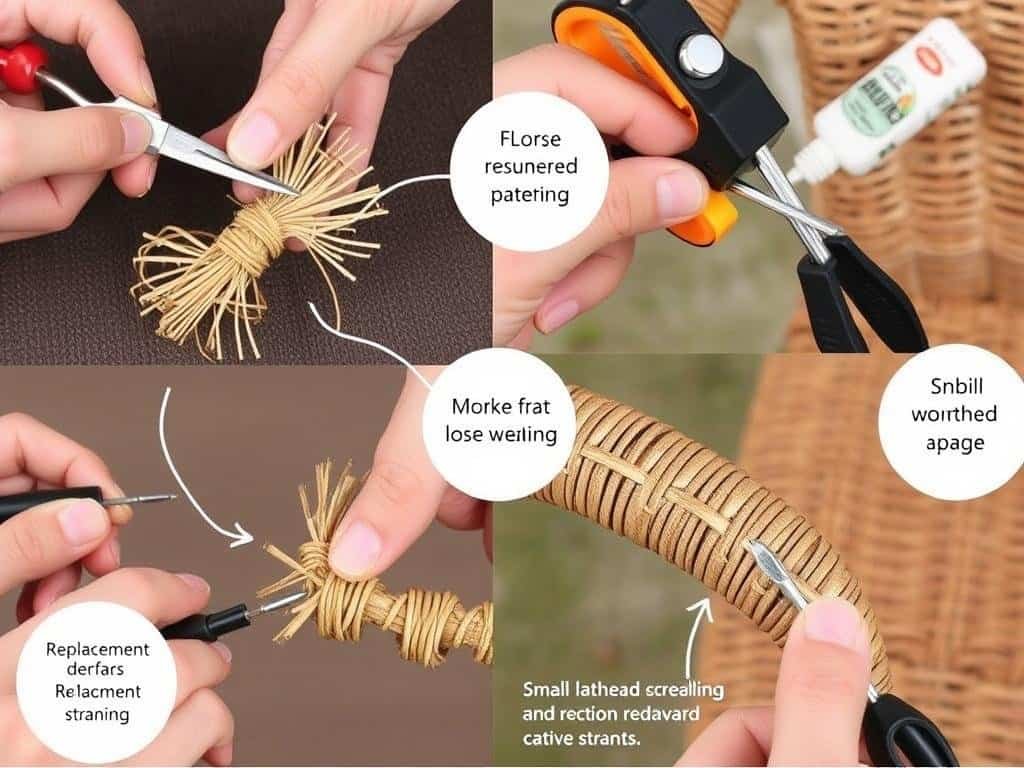
- Loose weaving: Secure loose ends by tucking them into the weave with a small flathead screwdriver. For synthetic wicker, clear glue can help secure ends.
- Broken strands: Replace damaged sections by weaving in new material that matches the original. Soak natural replacement strands in water first to increase flexibility.
- Color fading: Restore natural wicker color with specialized wicker stains. Synthetic wicker can sometimes be refreshed with vinyl spray paint designed for outdoor use.
- Structural damage: Reinforce weakened frames with wood glue and clamps. Severe structural issues may require professional repair.
When should I consider professional repair?
Consider professional repair services when dealing with antique or valuable wicker pieces, extensive structural damage, or if multiple repair attempts have been unsuccessful. Professional wicker restorers have specialized tools and materials to address complex issues while preserving the furniture’s integrity and value.
Storage Recommendations for Off-Season
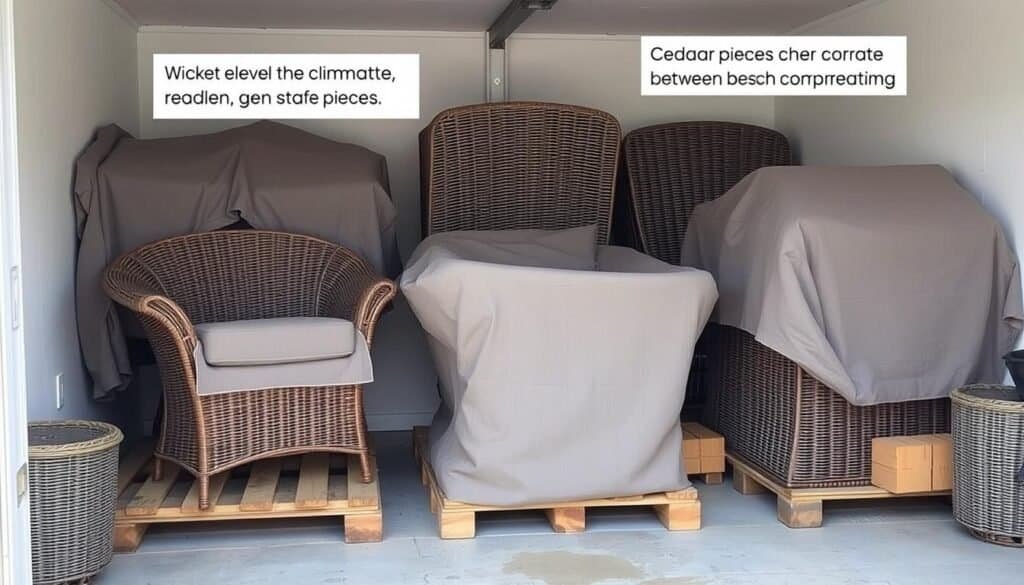
- Clean thoroughly: Before storage, clean all wicker pieces completely and ensure they are fully dry to prevent mold and mildew growth.
- Climate control: Store wicker furniture in climate-controlled environments when possible. Extreme temperature fluctuations and humidity can damage natural wicker.
- Elevation: Keep wicker furniture elevated off concrete floors using pallets or furniture risers to prevent moisture absorption.
- Avoid compression: Don’t stack heavy items on wicker furniture during storage, as this can deform the weaving patterns and damage the structure.
- Pest prevention: Consider using cedar blocks or other natural pest deterrents in storage areas to prevent insect damage to natural wicker.
Conclusion: The Enduring Appeal of Wicker Furniture
Wicker furniture continues to captivate homeowners and designers alike with its unique combination of visual texture, lightweight practicality, and versatile styling. Whether you choose natural materials for their authentic charm and sustainability or synthetic options for their weather resistance and durability, wicker furniture offers distinctive character that few other materials can match.
By understanding the different types of wicker, their appropriate applications, and proper care techniques, you can make informed decisions that enhance your living spaces while ensuring your investment lasts for years to come. From traditional sunrooms to contemporary outdoor living areas, wicker furniture adapts to changing design trends while maintaining its timeless appeal.
As you consider incorporating wicker into your home or commercial space, remember that quality construction and proper maintenance are key to long-term satisfaction. With the right pieces and care, wicker furniture can transform your environment with its distinctive texture and enduring charm.