The Defining Factor: It’s All About Material
When it comes to wicker furniture longevity, material choice is the single most critical factor. Today’s market offers two distinct categories: natural wicker and synthetic wicker. Each has dramatically different durability profiles, especially when used outdoors.
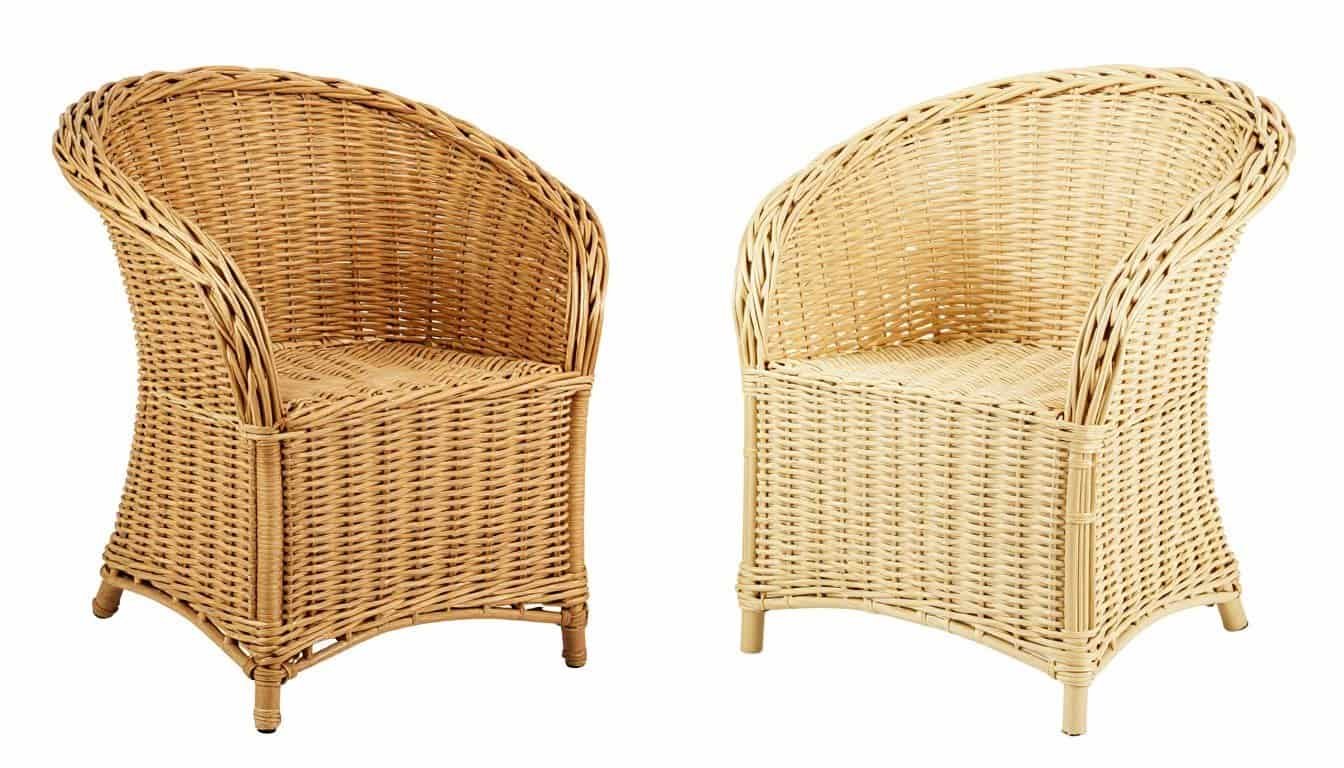
Natural wicker (left) vs. synthetic wicker (right): The material choice significantly impacts furniture lifespan
Natural Wicker Materials and Their Lifespan
Natural wicker is crafted from plant fibers that have been used for millennia. While beautiful and eco-friendly, these materials have inherent limitations when it comes to durability, especially in challenging environments.
| Natural Material | Indoor Lifespan | Outdoor Lifespan | Best Environment |
| Rattan | 15-20 years | 2-5 years | Indoor, low humidity |
| Bamboo | 7-10 years | 1-3 years | Indoor only |
| Seagrass | 5-10 years | 1-2 years | Indoor, low traffic |
| Water Hyacinth | 5-10 years | 1-2 years | Indoor only |
| Willow | 10-15 years | 2-4 years | Indoor, covered porch |
Rattan stands out as the most durable natural wicker material, potentially lasting two decades with proper indoor care. Its solid core and high tensile strength make it resistant to everyday wear. However, even rattan deteriorates quickly when exposed to moisture, direct sunlight, and temperature fluctuations—making it unsuitable for most outdoor settings without significant protection.
Synthetic Wicker Materials and Their Lifespan
Modern synthetic wicker addresses the limitations of natural materials. Engineered specifically for durability and weather resistance, these materials can withstand conditions that would quickly destroy natural wicker.
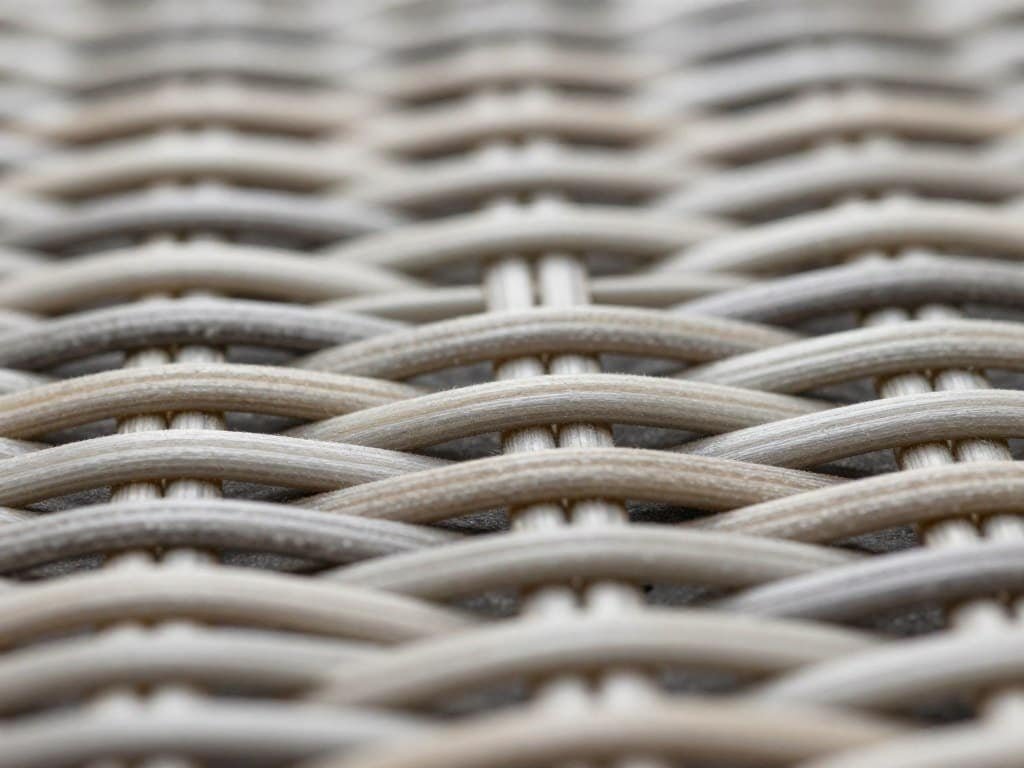
Close-up of high-density polyethylene (HDPE) wicker showing weather-resistant properties
| Synthetic Material | Indoor Lifespan | Outdoor Lifespan | Weather Resistance |
| High-Density Polyethylene (HDPE) | 15-20+ years | 10-15 years | Excellent (UV, water, temperature) |
| Polyvinyl Chloride (PVC) | 10-15 years | 3-7 years | Good (becomes brittle with UV exposure) |
| Polypropylene (PP) | 10-15 years | 5-8 years | Good (less flexible than HDPE) |
| Resin Wicker | 15-20 years | 7-12 years | Very Good (depends on specific formulation) |
High-density polyethylene (HDPE) is the gold standard for outdoor wicker furniture. It resists UV degradation, doesn’t absorb water, maintains flexibility in temperature extremes, and can be fully recycled at the end of its life. Quality HDPE wicker furniture can last 10-15 years outdoors with minimal maintenance—a dramatic improvement over natural materials.
Material Science Insight: The durability difference between natural and synthetic wicker comes down to cellular structure. Natural plant fibers contain cellulose that absorbs water, expands, and contracts with humidity changes, eventually breaking down the material. Synthetic polymers like HDPE have closed-cell structures that prevent water absorption and contain UV stabilizers that block the photodegradation process.
Natural vs. Synthetic Wicker: Head-to-Head Comparison
Natural Wicker Advantages
- Superior aesthetic appeal and authentic texture
- Environmentally sustainable (renewable resource)
- Lightweight and easy to move
- Develops character and patina over time
- Biodegradable at end of life
Natural Wicker Disadvantages
- Poor resistance to moisture and humidity
- Degrades quickly in direct sunlight
- Requires regular maintenance and conditioning
- Susceptible to mold and mildew growth
- Short lifespan when used outdoors (1-5 years)
Synthetic Wicker Advantages
- Exceptional weather resistance (10-15+ years outdoors)
- Minimal maintenance requirements
- Resistant to fading, cracking, and warping
- Impervious to mold, mildew, and insects
- Available in diverse colors and styles
Synthetic Wicker Disadvantages
- Less authentic appearance and texture
- Petroleum-based (environmental concerns)
- Can become hot in direct sunlight
- Lower-quality versions may look “plastic-like”
- Not biodegradable (though HDPE is recyclable)
For indoor use where furniture is protected from the elements, natural wicker offers unmatched beauty and can last 15-20 years. However, for outdoor settings or areas with high humidity, synthetic wicker dramatically outperforms natural materials in longevity—often lasting three to five times longer with less maintenance.
The Hidden Support System: Frames & Construction
How Long Does Wicker Furniture Last: Understanding Durability Factors
While the woven material gets all the attention, the frame is equally crucial to wicker furniture longevity. Even the finest wicker weave will fail prematurely if built on a substandard frame.
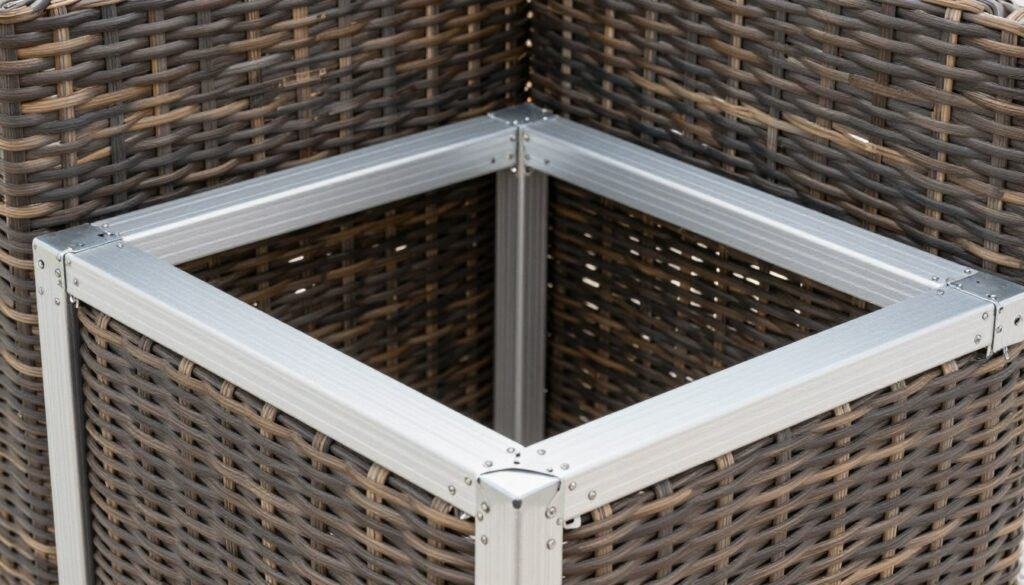
Quality aluminum frame construction provides the foundation for long-lasting wicker furniture
Frame Materials and Their Impact on Durability
| Frame Material | Expected Lifespan | Rust/Corrosion Resistance | Weight | Best Use |
| Aluminum | 15-20+ years | Excellent | Light | Outdoor/Indoor |
| Powder-Coated Steel | 8-12 years | Good (until coating fails) | Heavy | Indoor/Covered Outdoor |
| Stainless Steel | 15-20+ years | Very Good | Heavy | Outdoor/Indoor |
| Hardwood | 10-15 years | N/A | Medium | Indoor Only |
| Wrought Iron | 10-15 years | Poor (requires maintenance) | Very Heavy | Indoor/Covered Outdoor |
Aluminum frames represent the ideal choice for long-lasting wicker furniture, especially for outdoor use. They’re naturally rust-resistant, lightweight yet strong, and won’t warp or crack with temperature changes. For maximum durability, look for fully welded (not screwed) aluminum frames with reinforced stress points.
“The manufacturing process and attention to detail during construction is the single most important factor in building furniture that will withstand even the harshest elements. If the furniture is poorly made, it won’t last, regardless of material.”
Construction Quality Indicators
Beyond materials, construction quality dramatically impacts how long wicker furniture lasts. Here are key indicators of quality construction that predict longer lifespan:
Quality Construction Features
- Tight, uniform weaving with no loose ends or gaps
- Double-wrapped edges for reinforcement at stress points
- Fully welded frame joints rather than screwed connections
- UV stabilizers added to synthetic materials
- Solution-dyed fibers (color throughout, not just surface)
- Reinforced stress points at arms, legs, and seat
Poor Construction Warning Signs
- Visible glue holding weave in place
- Inconsistent weave pattern or loose strands
- Hollow, lightweight feel indicating thin frame
- Wobbling or creaking when weight is applied
- Staples visible at connection points
- Shiny, plastic-like appearance of synthetic weave
The Enemies of Longevity & How to Fight Them
Even the highest quality wicker furniture faces environmental challenges that can shorten its lifespan. Understanding these threats helps you protect your investment and extend its useful life.
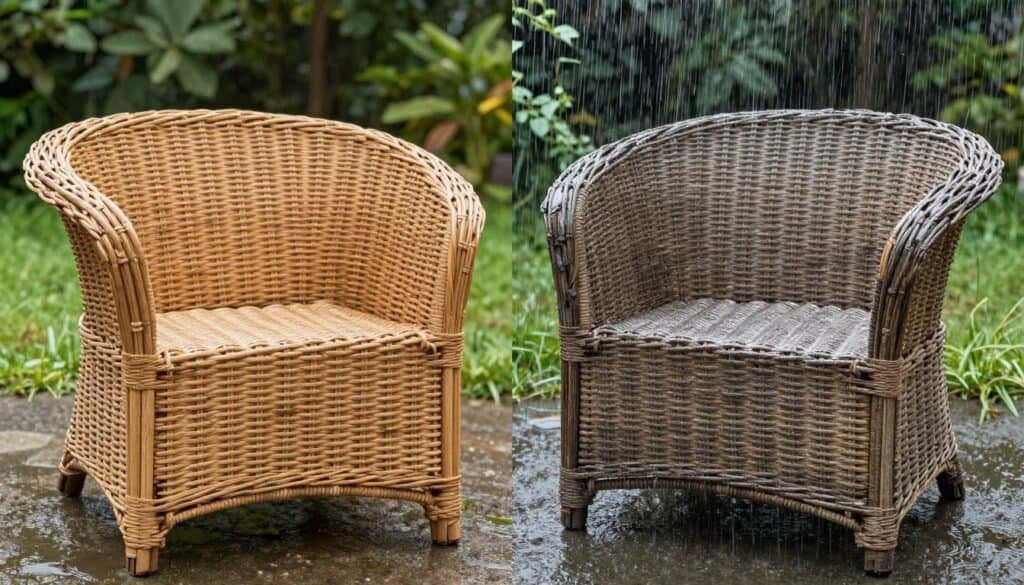
Environmental factors can dramatically impact wicker furniture lifespan
Sun & UV Damage
Ultraviolet radiation is perhaps the most destructive force for both natural and synthetic wicker. UV rays break down the cellular structure of natural fibers and cause photodegradation in plastics, leading to:
- Color fading – Most noticeable in darker colors
- Brittleness – Materials become fragile and prone to breaking
- Surface cracking – Small fissures develop that worsen over time
- Structural weakening – Reduced tensile strength and flexibility
Protection Strategy: Position furniture away from direct sunlight when possible. Use furniture covers when not in use. Apply UV-protective sprays to natural wicker annually. For synthetic wicker, choose materials with built-in UV stabilizers.
Moisture & Mold
Water is particularly damaging to natural wicker but can also affect synthetic materials and frames over time:
- Swelling and warping – Natural fibers expand when wet
- Mold and mildew growth – Especially in humid climates
- Frame rust – On steel frames with compromised coatings
- Joint weakening – Repeated moisture exposure loosens connections
Protection Strategy: Keep natural wicker indoors or in covered areas. Use waterproof covers during rain. Clean spills immediately. Apply protective sealants to natural wicker. Ensure proper drainage where furniture sits to prevent standing water.
Physical Stress & Wear
Daily use creates physical stress that eventually impacts durability:
- Weave loosening – From repeated sitting and standing
- Joint stress – Particularly at arms and legs
- Surface abrasion – From cleaning or rough handling
- Cushion compression – Reducing comfort over time
Protection Strategy: Distribute weight evenly across furniture. Rotate cushions regularly. Avoid dragging furniture across surfaces. Use appropriate cleaning tools (soft brushes, not abrasive scrubbers).
The Care Calendar: Maximizing Wicker Furniture Lifespan
Proper maintenance is the key to extending wicker furniture life beyond average expectations. Following a seasonal care routine can add years to your furniture’s useful life.
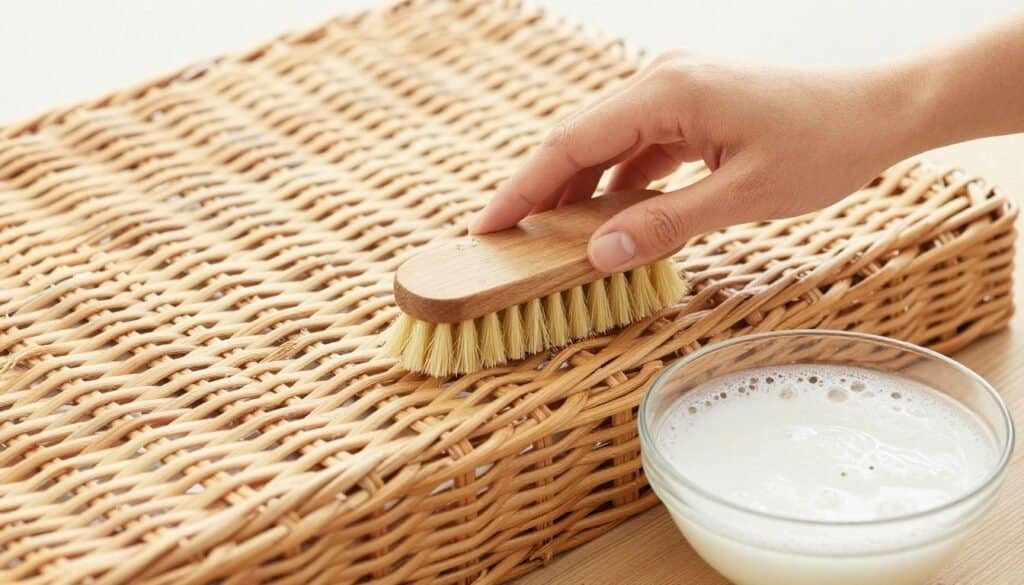
Regular cleaning with appropriate tools significantly extends wicker furniture lifespan
Routine Cleaning
Regular cleaning prevents dirt buildup that can abrade fibers and harbor moisture:
- Weekly: Dust with a soft cloth or vacuum with brush attachment
- Monthly: Wipe down with slightly damp cloth (synthetic wicker only)
- Quarterly: Deep clean with mild soap solution and soft brush
- Annually: Inspect and address any loose weaves or damage
Never use: Pressure washers, bleach, abrasive cleaners, or stiff brushes on wicker furniture. These can damage the weave and finish, significantly reducing lifespan.
Seasonal Protection
Different seasons present unique challenges to wicker durability:
| Season | Natural Wicker Care | Synthetic Wicker Care |
| Spring | Deep clean, apply linseed oil or sealant | Wash with mild soap, check for winter damage |
| Summer | Keep out of direct sun, monitor humidity | Rinse occasionally, use furniture covers when not in use |
| Fall | Clean thoroughly, prepare for indoor storage | Clean debris, apply protective spray |
| Winter | Store indoors in climate-controlled space | Cover or store, elevate from ground if left outside |
Protective Treatments
Applying protective treatments can significantly extend wicker furniture life:
For Natural Wicker
- Linseed oil – Conditions and moisturizes fibers
- Lacquer or varnish – Seals and protects surface
- Polyurethane – Creates moisture-resistant barrier
- Tung oil – Penetrates and preserves fibers
For Synthetic Wicker
- UV protectant spray – Prevents sun damage
- Vinyl protectant – Maintains flexibility
- Water repellent – Additional moisture protection
- Furniture polish – Restores sheen and repels dust
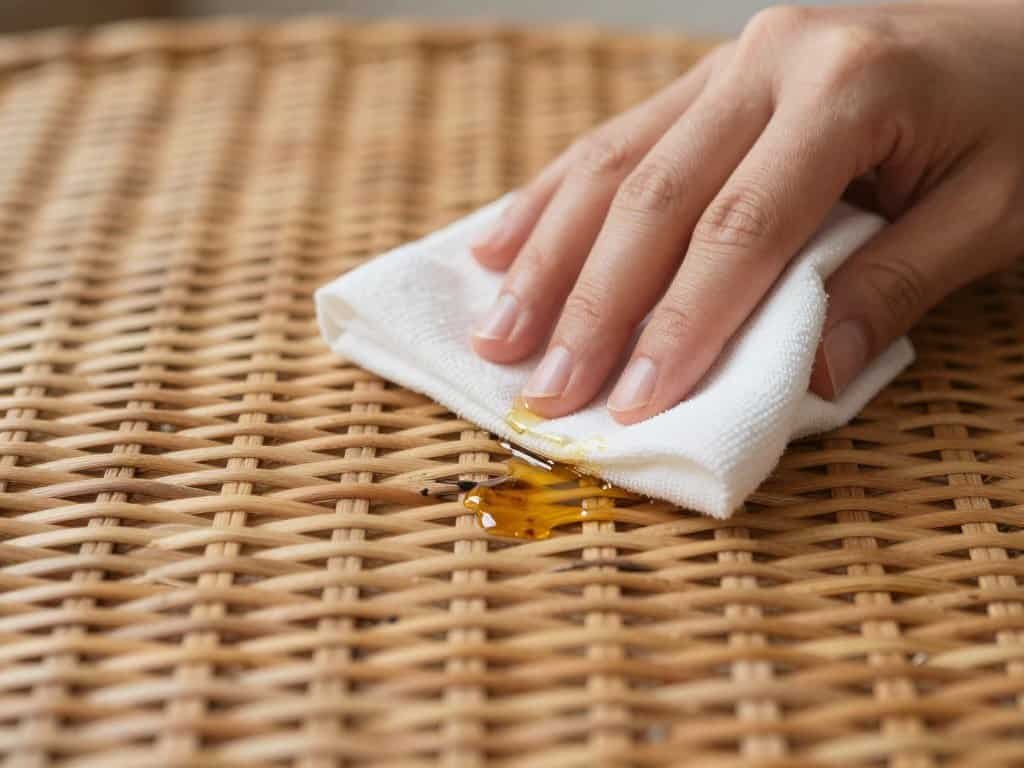
Applying protective oil treatments to natural wicker helps preserve flexibility and prevent cracking
Can You Make It Last a Lifetime? Repair & Restoration
Even well-maintained wicker furniture eventually shows signs of wear. Knowing when and how to repair minor damage can significantly extend its useful life.
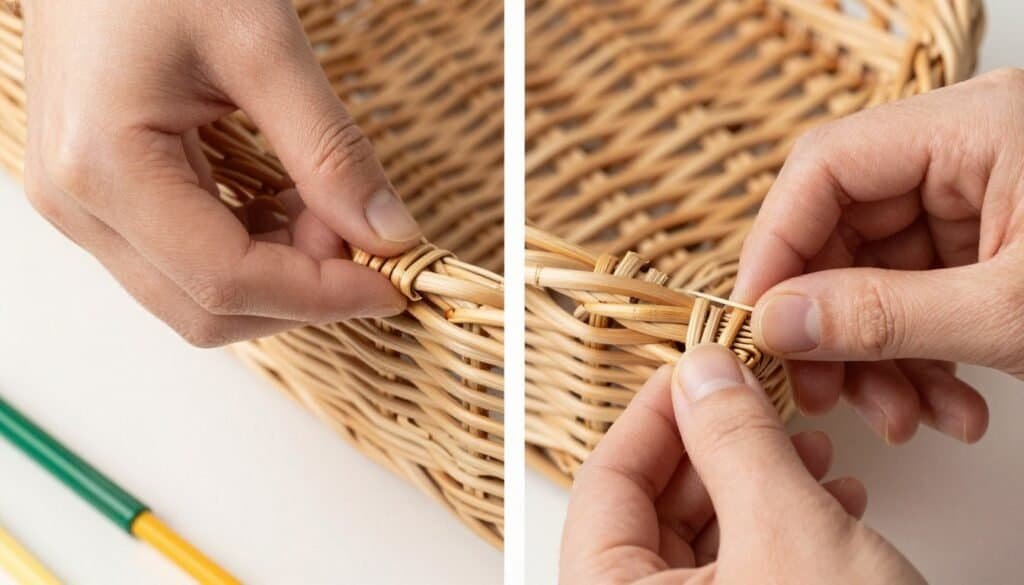
Many wicker damage issues can be repaired with proper techniques and materials
When to Repair vs. Replace
Understanding which issues are repairable helps you make cost-effective decisions:
| Issue | Repairable? | Repair Difficulty | Impact on Lifespan |
| Loose strands | Yes | Easy | Minor extension |
| Small breaks in weave | Yes | Moderate | Significant extension |
| Color fading | Partially | Moderate | Cosmetic only |
| Frame damage | Sometimes | Difficult | Critical |
| Extensive weave damage | Rarely | Very Difficult | Limited |
DIY Repair Techniques
Many common wicker issues can be addressed with simple DIY repairs:
How do I fix loose wicker strands?
For minor loosening, apply a small amount of wood glue or clear-drying craft glue to the loose strand and press it back into place. Hold with clothespins or clips until dry (usually 24 hours). For synthetic wicker, specialized plastic adhesives provide better bonding.
Can I replace broken wicker sections?
Yes, for natural wicker, replacement reed can be purchased from craft stores. Soak the reed in water for 30 minutes to make it pliable, then weave it into the damaged area following the existing pattern. For synthetic wicker, contact the manufacturer for matching replacement material.
How do I restore faded wicker color?
Natural wicker can be refreshed with specialized wicker stains or paints. Clean thoroughly first, then apply in thin coats. For synthetic wicker, vinyl dyes or outdoor fabric paints formulated for plastics can restore color, though results vary by material type.
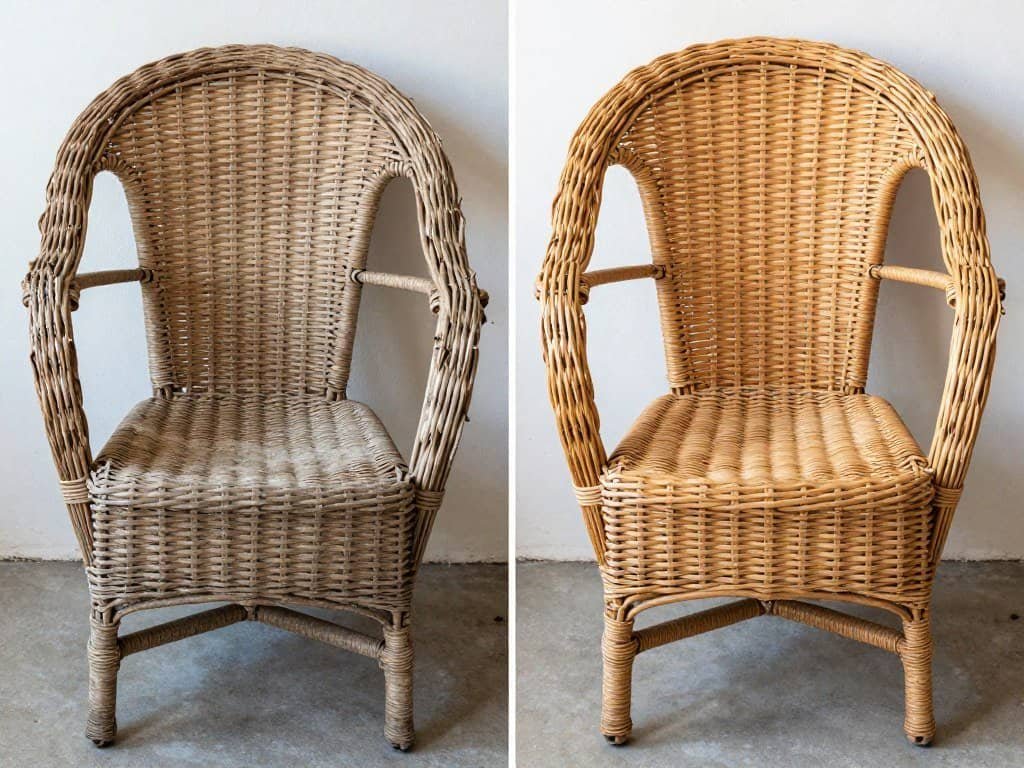
Professional restoration can give decades-old wicker furniture new life
For valuable or antique wicker pieces, professional restoration services can completely rebuild damaged sections and restore original finishes. While costly, this can be more economical than replacing high-quality furniture and preserves vintage pieces that may have historical or sentimental value.
The Verdict: How Long Will Your Wicker Furniture Last?
After examining all factors that influence wicker furniture longevity, we can provide these evidence-based lifespan estimates:
- Natural wicker indoors: 10-20 years with proper care and maintenance
- Natural wicker outdoors: 1-5 years, even with protective measures
- Synthetic wicker indoors: 15-20+ years with minimal maintenance
- Synthetic wicker outdoors: 7-15 years depending on quality and care
The most significant factors determining where your furniture will fall within these ranges are:
- Material quality – Premium materials last significantly longer
- Construction techniques – Proper weaving and frame construction are critical
- Environmental exposure – Sun, moisture, and temperature fluctuations accelerate aging
- Maintenance routine – Regular care dramatically extends useful life
- Usage patterns – Gentle, distributed use prevents premature wear
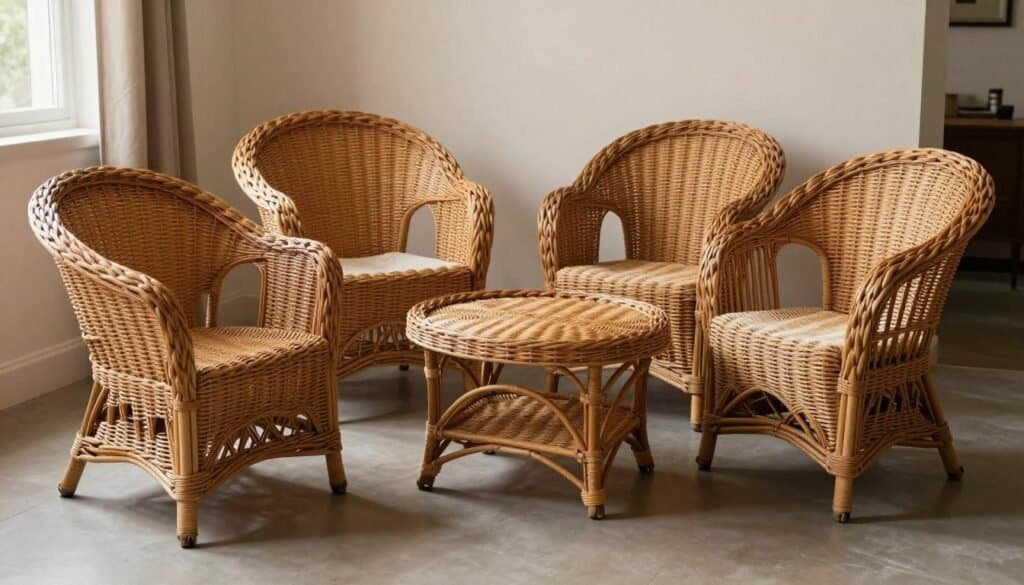
Well-maintained wicker furniture can remain beautiful and functional for decades.
Wicker furniture represents both an aesthetic choice and a practical investment. By selecting the right materials for your environment, investing in quality construction, and implementing proper maintenance routines, you can enjoy your wicker furniture for many years beyond average expectations.
For detailed maintenance steps, refer to *wicker care & guides* …