
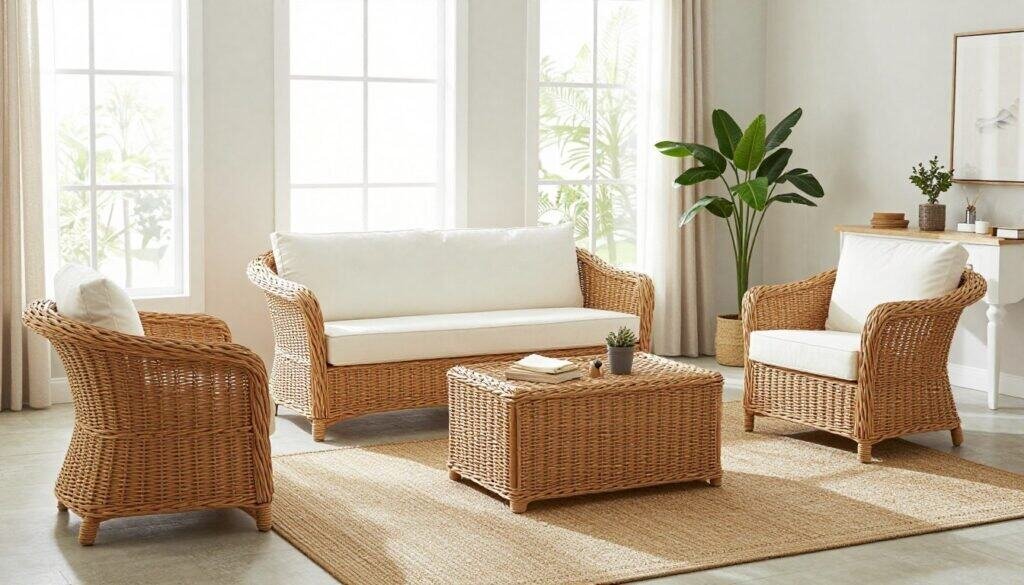
Why Wicker Furniture Works Well in Living Rooms
Wicker furniture has experienced a remarkable resurgence in interior design, and for good reason. Its unique properties make it particularly well-suited for living room environments where both style and function matter.
Comfort and Breathability
Unlike solid wood or metal furniture, which can feel rigid, quality indoor wicker furniture for living rooms offers a natural give and flexibility. The woven structure creates a slightly springy seat that conforms gently to your body. This inherent “bounce” makes wicker seating surprisingly comfortable, even without cushions (though most pieces come with them for added comfort).
The open weave design also promotes air circulation, preventing heat and moisture buildup. This breathability makes wicker especially pleasant in warmer climates or during summer months, keeping you cool during extended lounging sessions.

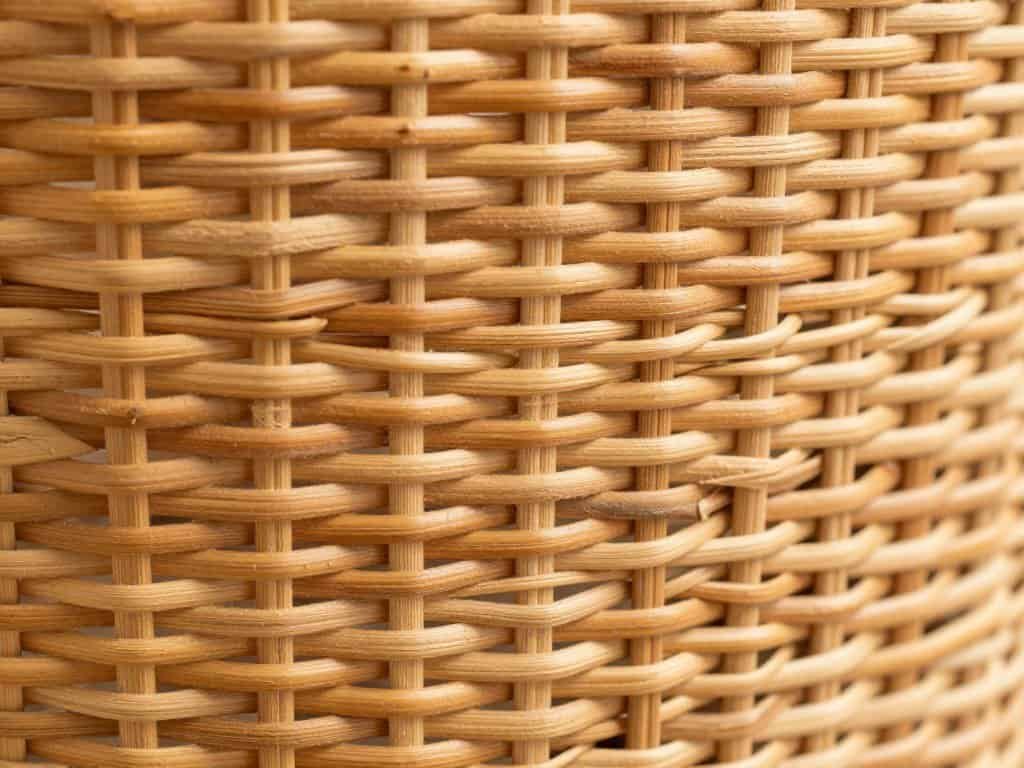
Visual Lightness Compared to Wood or Metal
One of wicker’s most appealing qualities is its visual lightness. While solid furniture can make a room feel heavy or crowded, wicker’s airy, open weave creates a sense of space. This makes wicker furniture for living room spaces particularly valuable in smaller areas or rooms where you want to maintain an open, uncluttered feel.
The visual transparency of wicker pieces allows light to filter through, creating interesting shadow patterns and preventing the furniture from dominating the visual space. This quality makes it easier to incorporate larger pieces without overwhelming your room’s design.
Casual Yet Refined Aesthetic
Wicker strikes a perfect balance between casual comfort and refined elegance. It brings warmth and texture to living rooms while maintaining a sophisticated appearance. This versatility allows wicker to complement various design styles—from coastal and bohemian to traditional and even modern when paired with the right elements.
The natural variations in wicker weaving create visual interest and depth that flat surfaces can’t match. Each piece tells a story of craftsmanship and brings an organic, handmade quality that mass-produced furniture often lacks.
Types of Wicker Furniture Commonly Used in Living Rooms
Wicker furniture offers remarkable versatility for living spaces. Understanding the different types available helps you choose pieces that best suit your needs and style preferences.
Chairs and Accent Seating
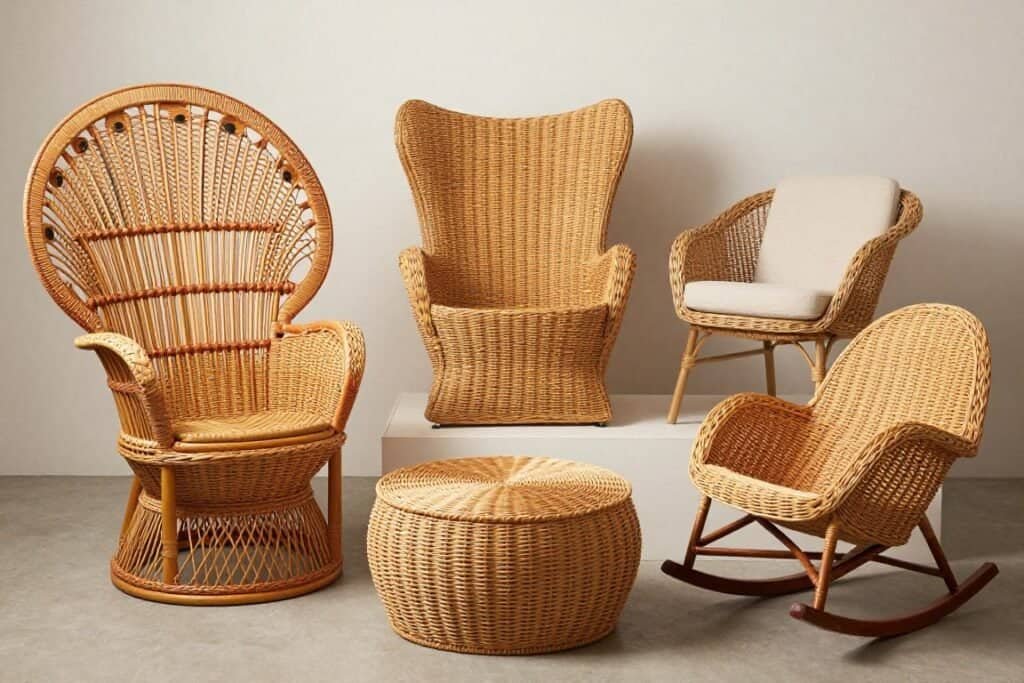
Wicker chairs for living room settings come in countless styles, from classic peacock chairs to modern wingbacks. These pieces make perfect accent seating, adding texture and character without overwhelming your space.
Popular options include:
- Papasan chairs – circular, nest-like seats perfect for casual lounging
- Wingback chairs – traditional silhouettes with wicker construction for a textural twist
- Accent chairs – smaller scale pieces that work well as additional seating
- Rocking chairs – combining the comfort of rocking with wicker’s natural give
Wicker accent chairs work particularly well when paired with solid upholstered pieces, creating a balanced mix of textures in your living room.

Sofas and Loveseats
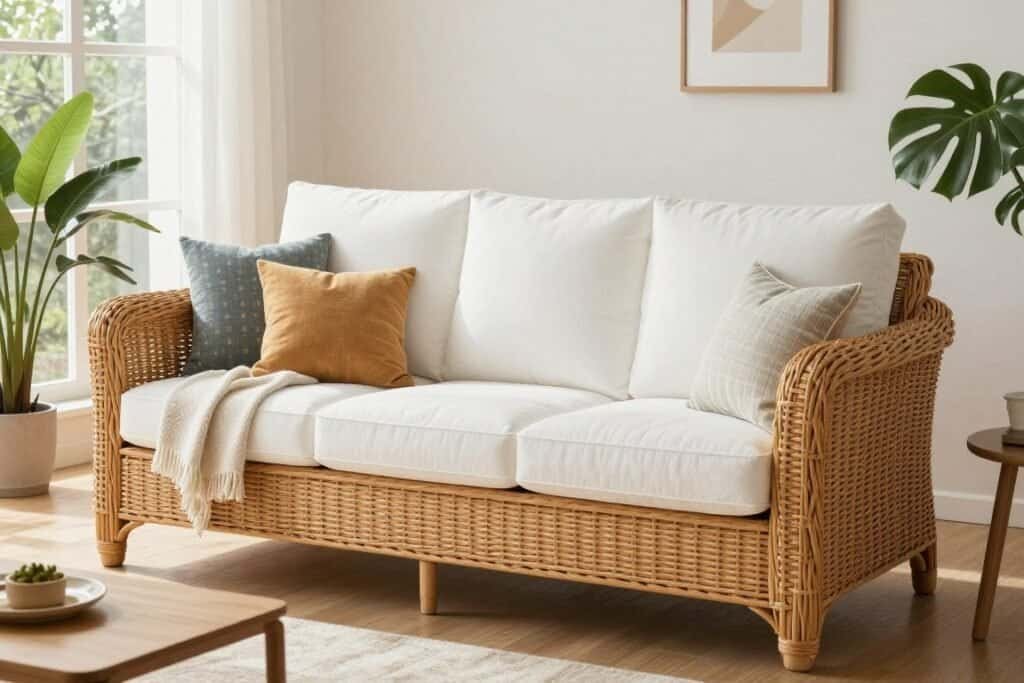
Wicker sofas and loveseats serve as stunning focal points in living room design. These larger pieces make a statement while maintaining the light, airy quality that makes wicker so appealing.
When selecting wicker seating for living room daily use, look for:
- Sturdy frames – preferably with hardwood internal structure
- High-quality cushions – thick, resilient foam wrapped in durable fabric
- Tight, consistent weaving – indicating quality craftsmanship
- Proper scale – proportioned to your space and other furniture
Many wicker sofas feature removable cushions, making them practical for homes with children or pets, as covers can often be cleaned or replaced as needed.
Coffee Tables and Side Tables
Wicker tables complete the living room furniture set, providing functional surfaces while maintaining design consistency. Coffee tables, side tables, and console tables in wicker construction add texture while serving essential purposes.
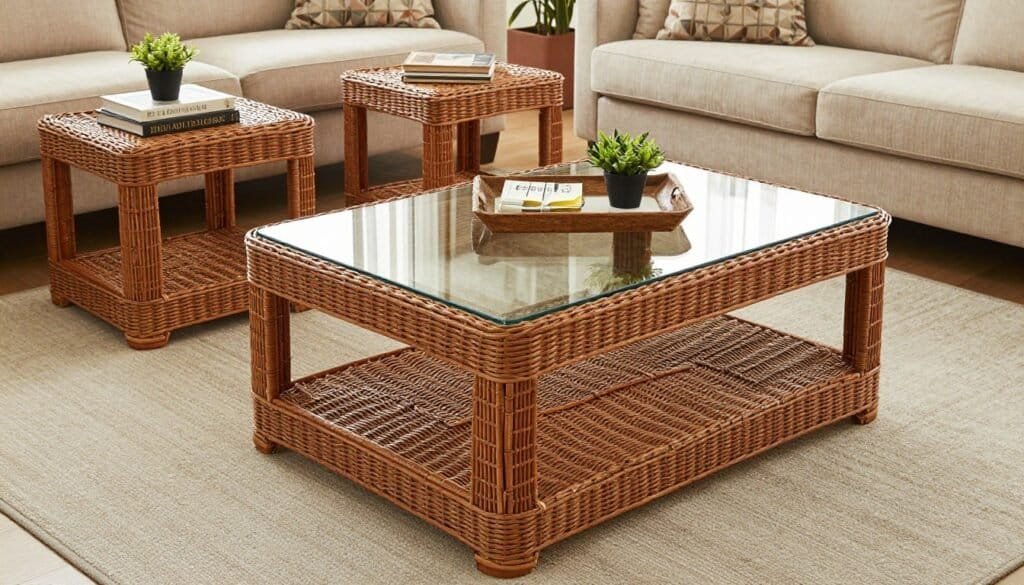
Many wicker tables feature:
- Glass tops – providing a flat, stable surface while showcasing the wicker base
- Storage options – including shelves or drawers for added functionality
- Mixed materials – combining wicker with wood, metal, or glass for contemporary appeal
- Versatile shapes – from round and oval to rectangular and square
Best Wicker Materials for Indoor Living Spaces
Natural Rattan and Cane
Natural materials remain the gold standard for indoor wicker furniture. Rattan, a vine-like palm, provides the perfect combination of flexibility and strength that makes wicker furniture both lightweight and durable.
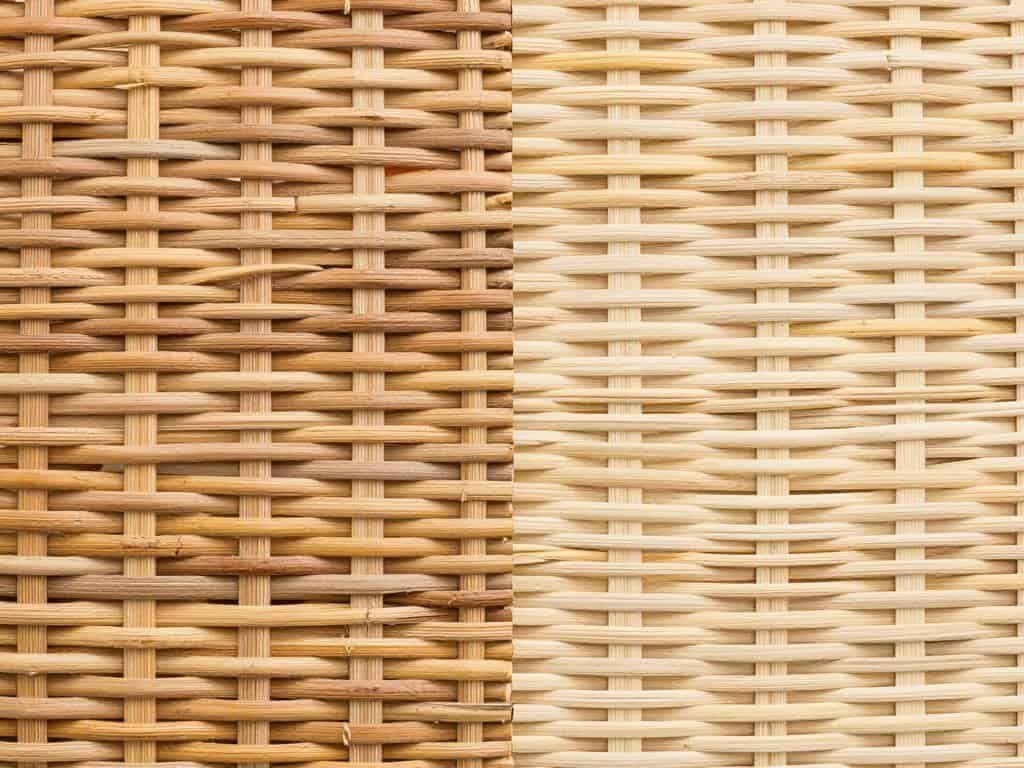
Key benefits of natural materials include:
- Authentic appearance with natural color variations and character
- Excellent flexibility that provides comfort and resilience
- Natural insulating properties that keep furniture comfortable year-round
- Sustainable sourcing options from responsibly managed forests
- Ability to be stained in various finishes to match your decor
Why Synthetic Wicker is Usually Unnecessary Indoors
While synthetic wicker (typically made from resin or plastic) dominates the outdoor furniture market, it’s generally unnecessary for indoor living room furniture. Natural wicker performs exceptionally well indoors, where it’s protected from the elements.
Natural Wicker Advantages
- Superior aesthetic quality and authentic appearance
- Natural flexibility and comfort
- Environmentally friendly material choice
- Ages beautifully, developing character over time
- Often more affordable than quality synthetic options
Synthetic Wicker Limitations
- Often looks artificial in indoor settings
- Less breathable than natural materials
- Environmental concerns with plastic-based products
- Can become brittle over time despite UV protection
- Quality synthetic options can be expensive
Frame Materials That Matter Most
The hidden structure supporting your wicker furniture is just as important as the woven exterior. Quality frames ensure your wicker furniture for living room use will maintain its shape and stability for years.
Look for wicker furniture with:
- Hardwood frames – providing structural integrity and weight-bearing capacity
- Reinforced joints – especially at stress points like arms and legs
- Proper moisture content – wood that’s been properly dried to prevent warping
- Quality fasteners – screws rather than staples for connecting components
Many manufacturers will specify frame materials in their product descriptions. Hardwoods like oak, ash, and mahogany provide excellent durability, while properly treated softwoods can also perform well at a lower price point.
Styling Wicker Furniture in a Living Room
The versatility of wicker furniture allows for countless styling possibilities. With thoughtful arrangement and complementary elements, you can create a living room that feels cohesive, inviting, and uniquely yours.
Pairing with Upholstery and Cushions
Cushions and upholstery play a crucial role in both the comfort and aesthetic of your wicker living room furniture. The right fabric choices can transform the look and feel of your space.
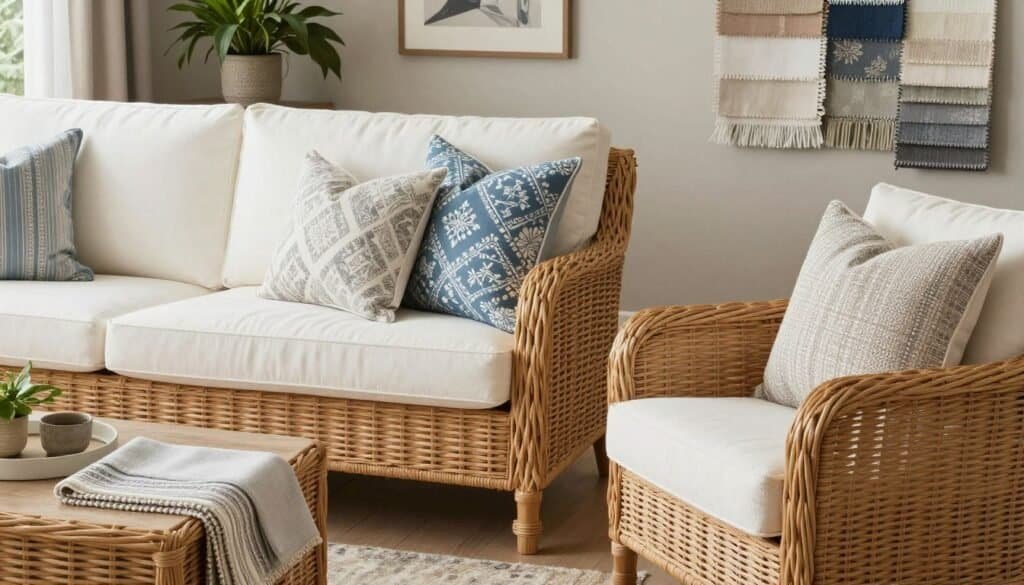
Consider these approaches:
- Neutral base cushions with colorful accent pillows for flexibility
- Performance fabrics for homes with children or pets
- Seasonal cushion covers to refresh your look throughout the year
- Textural contrasts like smooth velvet against rough wicker
- Complementary colors that enhance your wicker’s natural tones
Mixing Wicker with Wood, Fabric, and Metal
Creating a balanced living room involves thoughtfully combining wicker with other materials. This prevents the space from feeling one-dimensional while maintaining design harmony.
Successful combinations include:
- Wicker seating with solid wood tables for textural contrast
- Metal accent tables or lighting fixtures with wicker furniture
- Upholstered pieces alongside wicker chairs for balance
- Glass elements to create visual lightness and reflection
- Natural stone surfaces that complement wicker’s organic quality
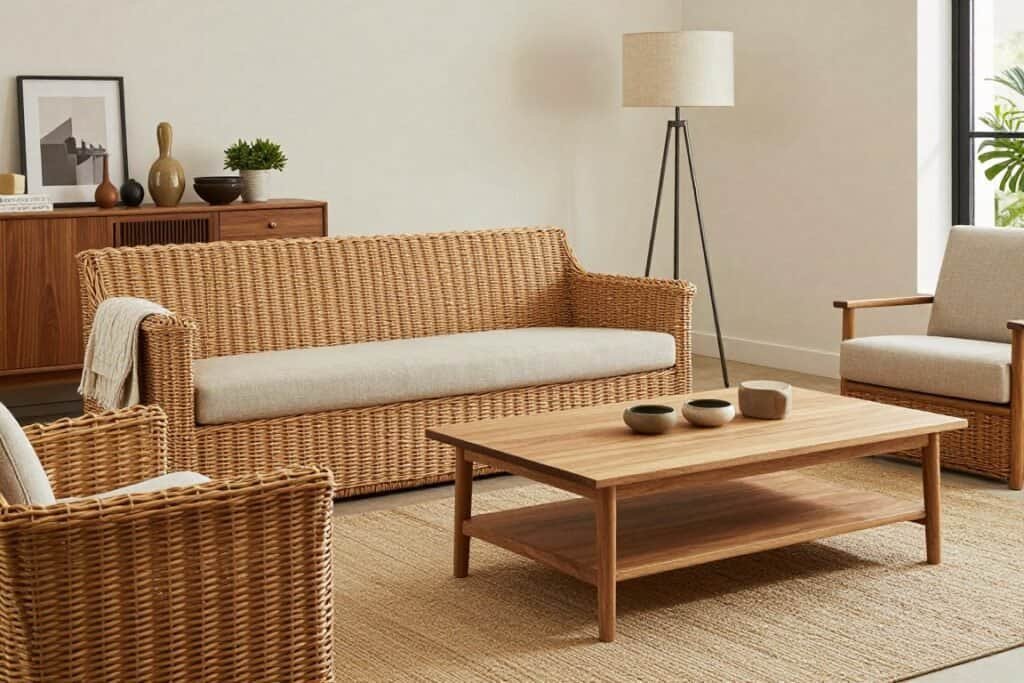
Colour Balance and Texture Layering
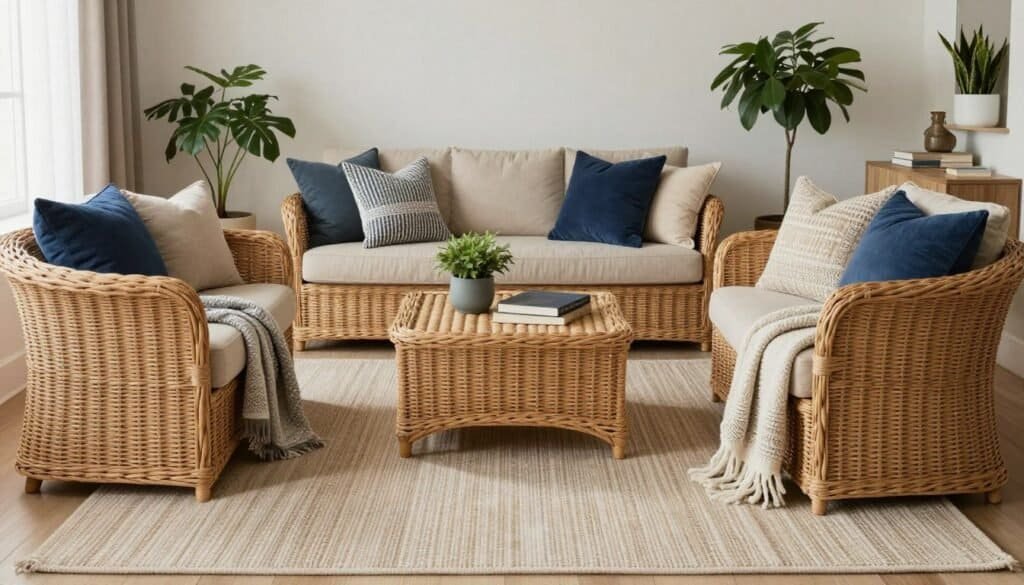
Wicker’s natural tones provide a wonderful neutral base for building a color story in your living room. Whether you prefer a monochromatic look or vibrant accents, wicker furniture adapts beautifully.
For a harmonious space:
- Build around wicker’s natural honey, blonde, or brown tones
- Layer textures through rugs, throws, and pillows
- Add depth with varying shades of your chosen color palette
- Incorporate plants to enhance wicker’s natural, organic appeal
- Consider painted wicker for specific color schemes (though natural finishes age better)
Comfort and Everyday Use Considerations
Beyond aesthetics, practical considerations ensure your wicker furniture for living room use will provide lasting comfort and satisfaction. Understanding these factors helps you select pieces that will serve you well for years.
Cushion Support and Seating Depth
The comfort of wicker seating largely depends on the quality and design of its cushions. Since wicker frames are relatively rigid, proper cushioning becomes essential for everyday comfort.
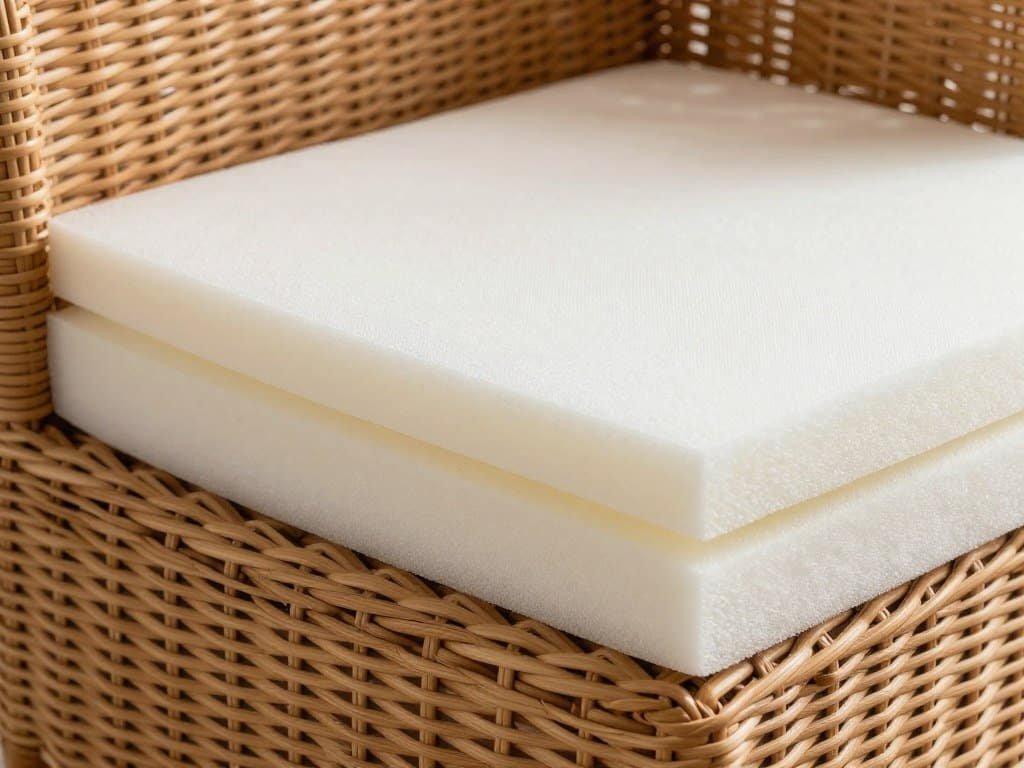
For optimal comfort, look for:
- High-density foam that maintains its shape (5-6 inches thick for sofas)
- Appropriate seating depth for your height and preferences
- Cushions with removable, washable covers
- Proper fit to the wicker frame without sliding or shifting
- Ergonomic design that supports proper posture
Weight Limits and Structural Expectations
Quality wicker furniture is surprisingly strong, but understanding its structural limitations helps prevent damage and ensures safety.
Important considerations include:
- Weight capacity – typically 250-300 pounds per seat for quality pieces
- Frame construction – hardwood frames offer superior strength
- Joint reinforcement – especially at stress points
- Weave tightness – indicating quality construction
- Manufacturer specifications – always check recommended weight limits
Suitability for Daily Use vs Occasional Seating
Different wicker pieces serve different purposes in your living room. Understanding which pieces work best for daily use versus occasional seating helps you create a functional space.
| Furniture Type | Daily Use Suitability | Best Application | Considerations |
| Wicker Sofas | High (with quality cushions) | Primary seating | Look for hardwood frames and 5-6″ cushions |
| Accent Chairs | Medium | Secondary seating | Comfortable for 1-2 hours at a time |
| Papasan Chairs | Medium-High | Reading nooks | Very comfortable but can be difficult to exit |
| Coffee Tables | High (with glass top) | Centerpiece | Glass provides flat, stable surface |
| Side Tables | High | Utility surfaces | Choose appropriate height for your seating |
Common Mistakes to Avoid
Even with the best intentions, there are several pitfalls that can diminish your experience with wicker furniture. Being aware of these common mistakes helps ensure your living room both looks beautiful and functions well.
Overusing Wicker in One Space
While wicker furniture for living room use adds wonderful texture and character, too much of a good thing can overwhelm a space. Balance is key to creating a harmonious environment.
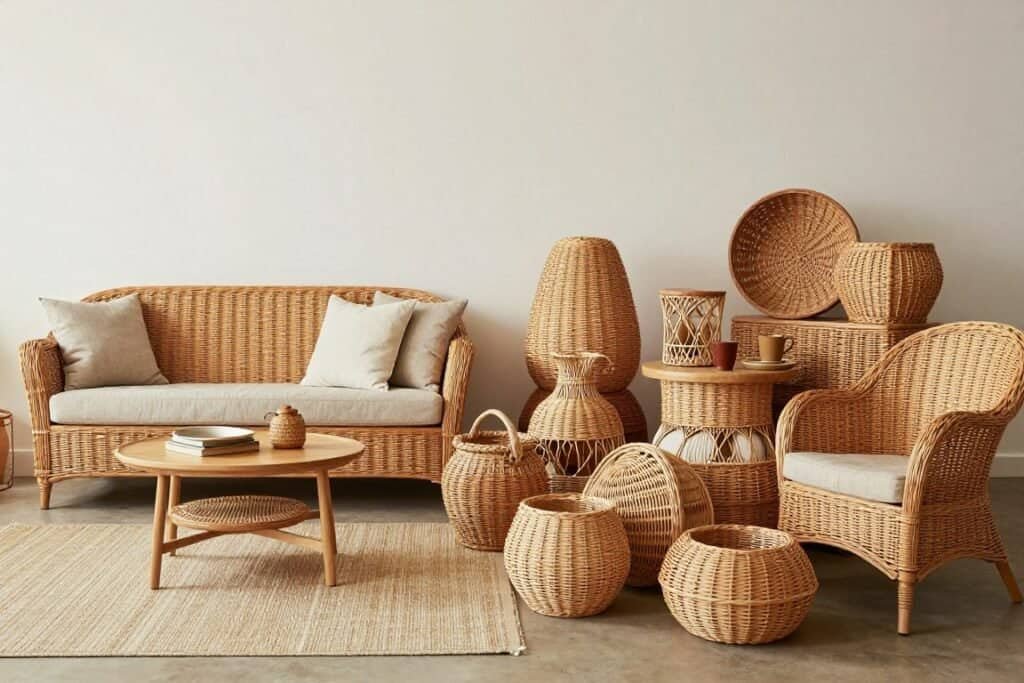
To avoid this mistake:
- Limit wicker to 2-3 key pieces in a single room
- Mix wicker with other materials for contrast
- Use wicker as a textural accent rather than the dominant material
- Consider scale and visual weight when combining pieces
- Allow each wicker piece enough space to be appreciated
Placing Near Moisture or Heat Sources
While indoor wicker is more protected than outdoor furniture, certain environmental factors can still damage natural wicker over time.
Protect your investment by:
- Keeping wicker away from radiators, heating vents, and fireplaces
- Avoiding placement near humidifiers or in rooms with excessive moisture
- Positioning away from direct sunlight that can dry and fade the material
- Maintaining consistent indoor humidity (40-60% is ideal)
- Using appropriate finishes to protect against minor spills
Choosing Poor-Quality Frames
The hidden structure of your wicker furniture determines its longevity. Investing in quality construction pays dividends in durability and satisfaction.
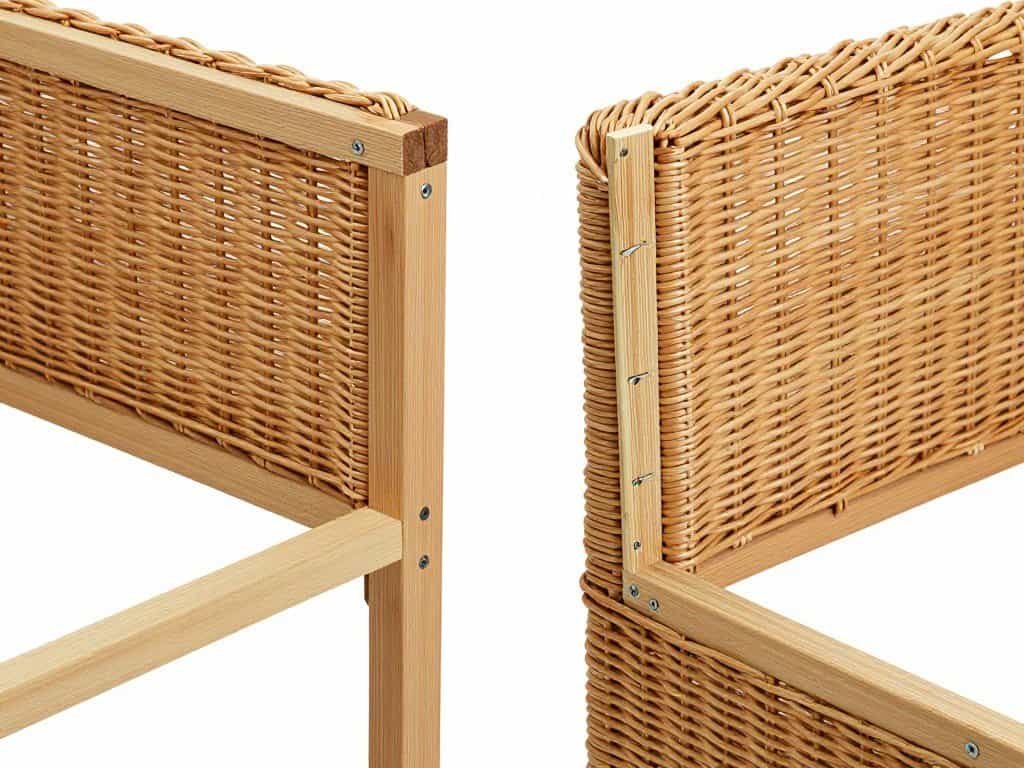
Warning signs of poor quality include:
- Lightweight construction that feels flimsy
- Visible staples rather than wrapped joints
- Uneven or loose weaving patterns
- Rough, unfinished edges that can snag clothing
- Excessive movement or creaking when weight is applied
Maintenance Tips for Living Room Wicker Furniture
Proper care ensures your wicker furniture remains beautiful and functional for many years. Fortunately, indoor wicker requires relatively simple maintenance compared to many other furniture materials.
Dust Management
Regular dusting prevents buildup in the intricate weave of wicker furniture for living room use. This simple habit preserves both appearance and longevity.
Effective dusting approaches include:
- Weekly dusting with a soft brush attachment on your vacuum
- Using compressed air cans for hard-to-reach crevices
- Wiping with a slightly damp microfiber cloth for stubborn dust
- Soft paintbrushes for detailed cleaning of tight weaves
- Avoiding feather dusters that can catch on the weave
Long-term Care Habits
Beyond regular dusting, several practices help maintain your wicker furniture’s beauty and structural integrity over the years.
Incorporate these habits:
- Rotate cushions regularly to ensure even wear
- Inspect for loose strands and trim them carefully
- Clean spills immediately with a barely damp cloth
- Vacuum cushions and crevices monthly
- Apply furniture polish specifically formulated for wicker annually

Preventing Drying and Brittleness
Natural wicker can become brittle if allowed to dry out excessively. Maintaining appropriate moisture balance keeps your furniture flexible and prevents cracking.
Protective measures include:
- Maintaining indoor humidity between 40-60%
- Using a humidifier in very dry climates or during winter heating season
- Applying boiled linseed oil or specialized wicker oil annually
- Keeping furniture away from direct heat sources
- Using window treatments to filter harsh direct sunlight
Embracing the Timeless Appeal of Wicker
By understanding the different types available, selecting quality materials, styling thoughtfully, and maintaining properly, you can enjoy the distinctive beauty of wicker furniture for many years. Whether you’re creating a coastal retreat, a bohemian sanctuary, or simply adding textural interest to your living room, wicker furniture provides endless possibilities for expressing your personal style while creating a comfortable, inviting home.