
Wicker vs Rattan: Defining the Terms
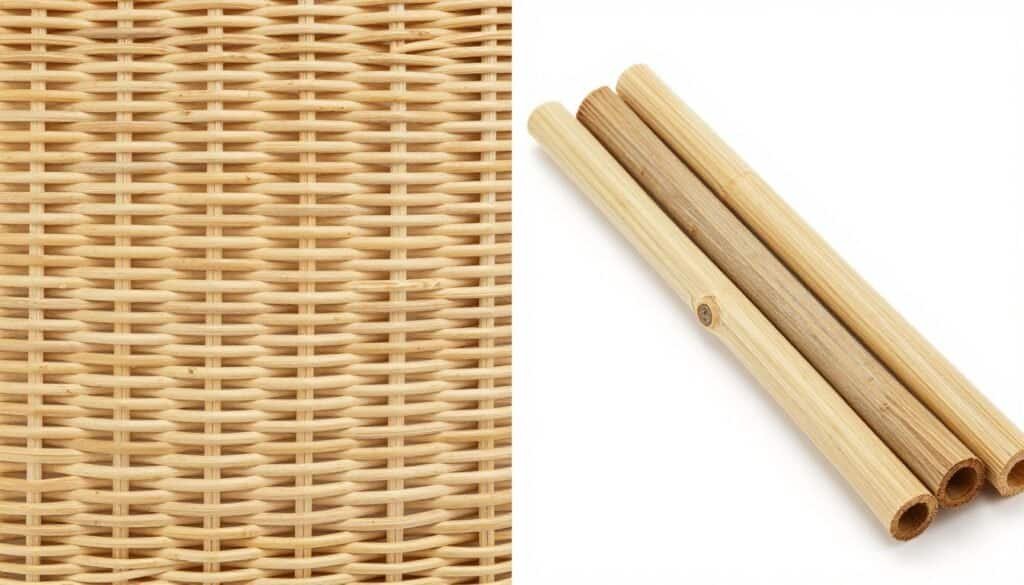
Left: Wicker weaving technique. Right: Natural rattan material before processing.
What is Wicker?
Wicker refers specifically to a weaving technique—not a material. This ancient craft dates back to Egyptian times (circa 3000 BCE), where archaeologists have discovered wicker baskets in tombs. The technique involves weaving pliable materials into a rigid structure, creating the characteristic lattice pattern we recognise in wicker furniture. The term describes only the method of construction, similar to how “knitting” describes a technique rather than the yarn itself.
What is Rattan?
Rattan, conversely, is a specific natural material—a type of climbing palm native to tropical regions of Africa, Asia, and Australia. With over 600 species, rattan grows as a vine-like plant that can reach lengths of up to 500 feet. Its solid core and natural flexibility make it ideal for furniture construction. When harvested, rattan stems are cut, dried, and processed into various forms for furniture making, including frames and weaving materials.
“Understanding that wicker is a technique while rattan is a material is the fundamental first step in making informed furniture decisions. This distinction affects everything from durability to maintenance requirements.”
The Material Science: What Wicker Furniture Is Actually Made From
Natural Materials Used in Wicker Weaving

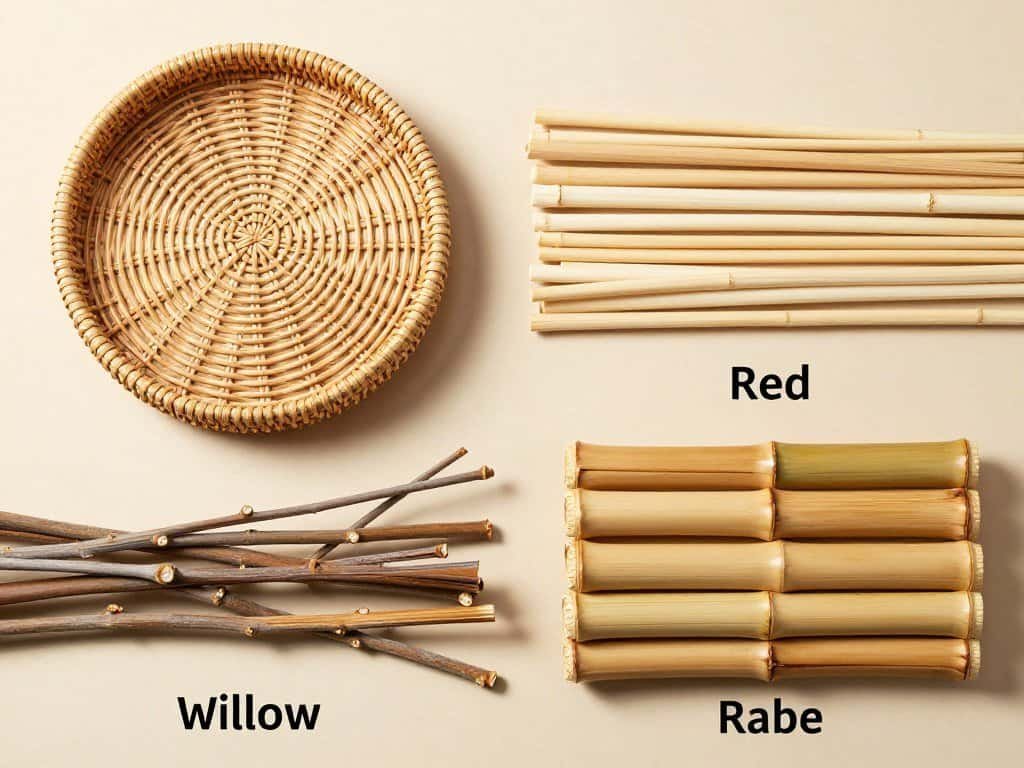
The wicker weaving technique can utilize several natural materials, each with distinct properties:
| Natural Material | Source | Characteristics | Best Uses |
| Rattan | Climbing palm species | Solid core, highly flexible, strong, natural nodes | Furniture frames, intricate weaving, high-end pieces |
| Reed | Tall wetland grasses | Hollow core, rigid, less flexible than rattan | Basket weaving, decorative elements, seat weaving |
| Willow | Willow tree branches | Very flexible, tapers naturally, rustic appearance | Rustic baskets, decorative pieces, traditional furniture |
| Bamboo | Bamboo grass | Hollow, strong, distinctive nodes, less flexible | Structural elements, tropical-style furniture |
| Seagrass | Marine flowering plants | Coarse texture, naturally water-resistant | Mats, baskets, casual furniture |
Rattan’s Unique Properties
Rattan possesses exceptional properties that make it particularly valuable for furniture construction:
- Solid core structure (unlike hollow bamboo) provides superior strength
- Natural flexibility allows it to be bent into curved shapes without breaking
- Excellent tensile strength makes it resistant to stretching and deformation
- Distinctive nodes provide natural reinforcement points
- Accepts stains and finishes well for versatile aesthetics
- Renewable resource that grows much faster than hardwoods (5-7 years vs. 20+ years)
Modern Synthetic Alternatives
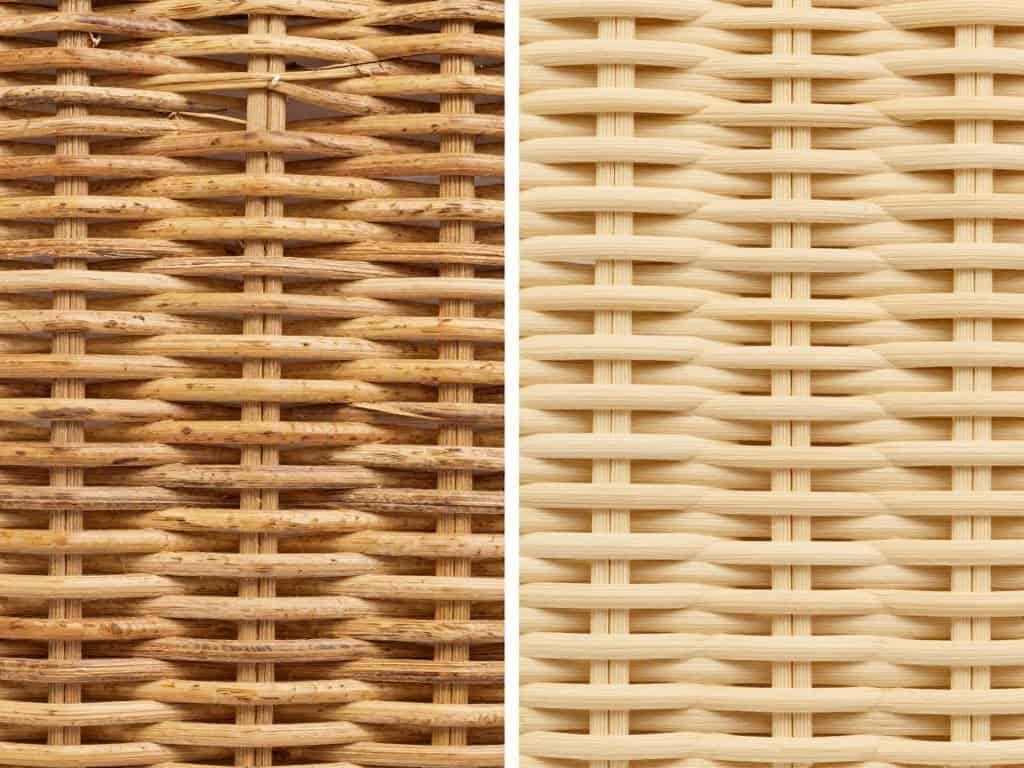
Modern outdoor “wicker” furniture is typically made from synthetic materials designed to mimic the appearance of natural wicker while offering superior weather resistance. The most common synthetic options include:
HDPE (High-Density Polyethylene) Wicker
HDPE has become the gold standard for outdoor synthetic wicker due to its exceptional properties:
- UV-stabilized to prevent fading and deterioration from sun exposure
- 100% waterproof and resistant to mold and mildew
- Temperature stable from -20°F to 180°F without becoming brittle or warping
- Environmentally friendly option often made from recycled materials
- Colorfast with pigment throughout the material (not just surface-coated)
- Maintains flexibility and won’t crack or peel over time
PVC (Polyvinyl Chloride) Wicker
PVC was one of the first synthetic wicker materials but has largely been superseded by HDPE:
- Less expensive than HDPE but typically less durable
- More prone to becoming brittle and cracking in cold temperatures
- Can fade more quickly in direct sunlight
- Often has color applied as a coating rather than throughout the material
- Less environmentally friendly due to chemical composition
Nylon and Polyethylene Blends
Various proprietary blends offer different performance characteristics:
- Often marketed under brand names like “Viro Fiber” or “Rehau Fiber”
- Engineered for specific performance attributes (extra flexibility, etc.)
- Quality and durability vary significantly between manufacturers
- Mid-range price point between PVC and premium HDPE
Construction Elements: Frames, Weaves, and Finishes

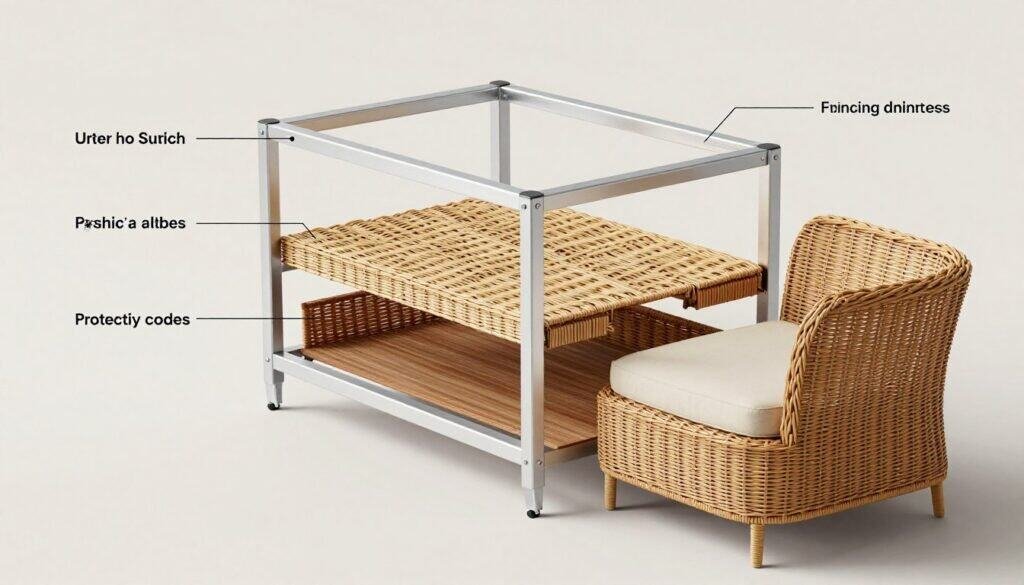
Frame Materials
The structural integrity of wicker furniture depends heavily on its frame construction:
Aluminum Frames
- Lightweight yet strong (typically powder-coated)
- Completely rust-resistant, ideal for outdoor use
- Won’t warp or deteriorate from moisture exposure
- Often used in higher-end outdoor synthetic wicker furniture
Steel Frames
- Extremely strong but heavier than aluminum
- Requires proper coating to prevent rust
- Often used in more affordable outdoor pieces
- Can develop rust if the protective coating is damaged
Rattan Frames
- Traditional choice for indoor wicker furniture
- Natural flexibility allows for curved designs
- Provides authentic aesthetic appeal
- Not suitable for continuous outdoor exposure
Hardwood Frames
- Offers excellent stability and longevity
- Often used in premium indoor pieces
- Provides substantial weight and sturdiness
- Some tropical hardwoods can work outdoors
Weaving Patterns and Techniques
The distinctive appearance of wicker furniture comes from various weaving patterns:

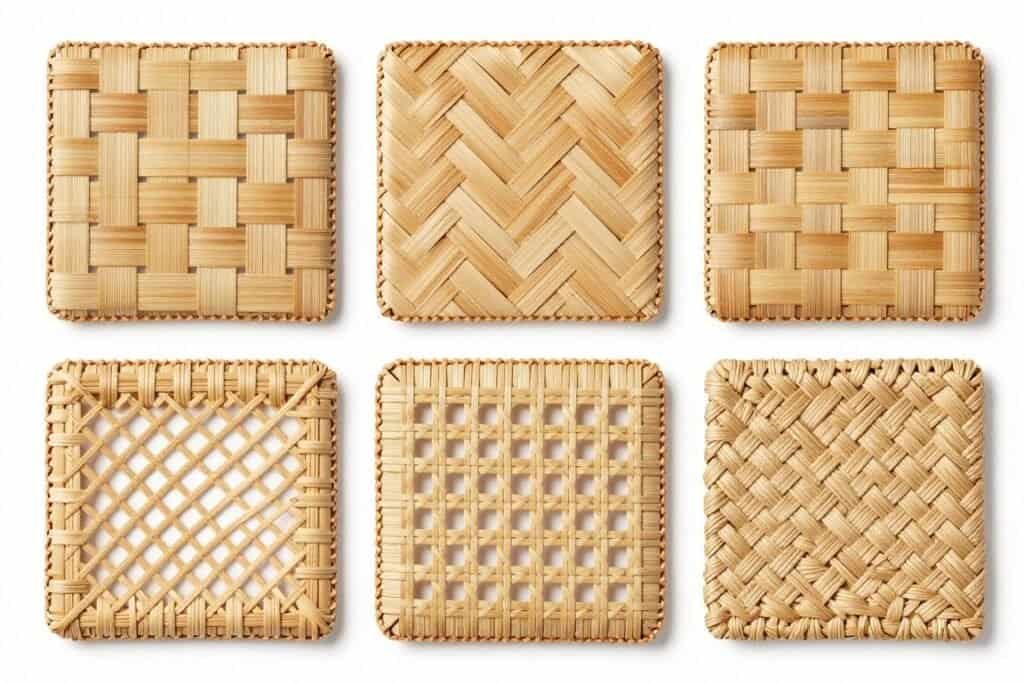
- Standard Crisscross – The classic over-under pattern seen in most wicker furniture
- Herringbone – A V-shaped pattern that adds visual interest and structural integrity
- Diamond – Creates distinctive diamond shapes through the weaving pattern
- Open Weave – Incorporates larger gaps for a more airy, contemporary look
- Tight Weave – Closely spaced weaving for maximum durability and minimal gaps
Finishes and Protective Treatments
The longevity of wicker and rattan furniture depends significantly on its finishing treatments:
For Natural Rattan and Wicker:
- Lacquer – Creates a hard, protective shell that seals the material
- Polyurethane – Offers excellent moisture resistance and durability
- Oil-Based Finishes – Penetrate the material to protect from within
- Stains – Can alter the color while allowing natural texture to show through
For Synthetic Wicker:
- UV Inhibitors – Mixed into the material to prevent sun damage
- Color-Through Technology – Ensures color remains even if scratched
- Antimicrobial Treatments – Prevent mold and mildew growth
- Powder-Coating – For metal frames to prevent rust and corrosion
Natural Rattan Wicker vs. Synthetic Wicker: A Comprehensive Comparison
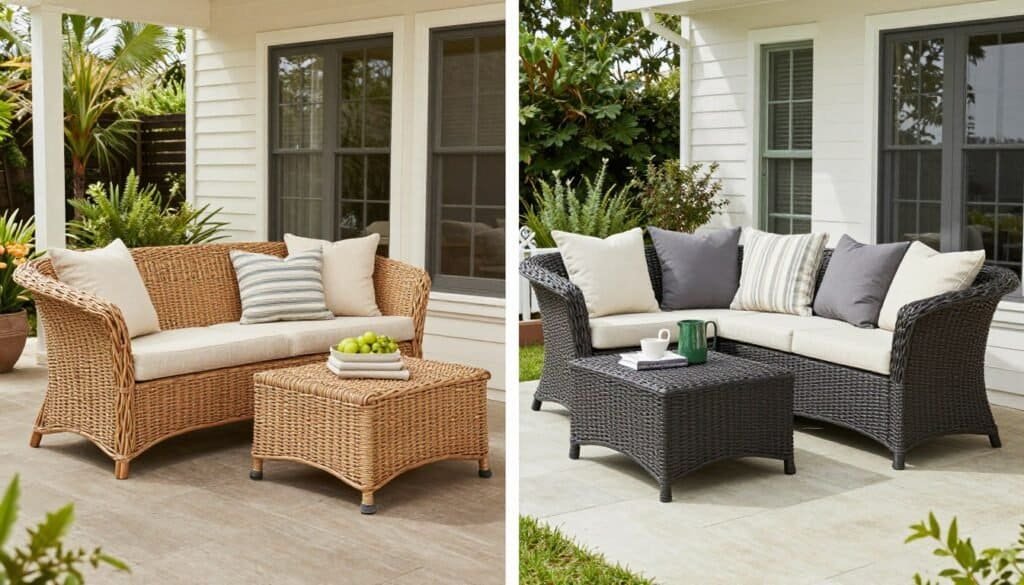
Natural Rattan Advantages
- Authentic natural beauty with unique grain patterns
- Pleasant tactile quality and organic warmth
- Lightweight yet strong for its weight
- Sustainable and biodegradable material
- Develops character and patina over time
- Excellent for indoor use and covered outdoor areas
- Can be repaired and refinished multiple times
Natural Rattan Limitations
- Vulnerable to moisture damage and rotting
- UV exposure causes fading and brittleness
- Requires regular maintenance and care
- Not suitable for uncovered outdoor use
- Can develop mold in humid environments
- Limited color options (natural tones)
- Higher quality pieces can be expensive
Synthetic Wicker Advantages
- Exceptional weather and UV resistance
- Virtually maintenance-free performance
- Will not rot, split, or develop mold
- Available in wide range of colors and styles
- Typically less expensive than quality natural rattan
- Ideal for uncovered outdoor applications
- Many options are recyclable (especially HDPE)
Synthetic Wicker Limitations
- Lacks the authentic natural texture and warmth
- Lower-quality versions can look artificial
- Can become hot to touch in direct sunlight
- Some types become brittle in extreme cold
- Cheaper versions may fade despite UV protection
- Not biodegradable at end of lifecycle
- Cannot be easily repaired if damaged
Environmental Considerations
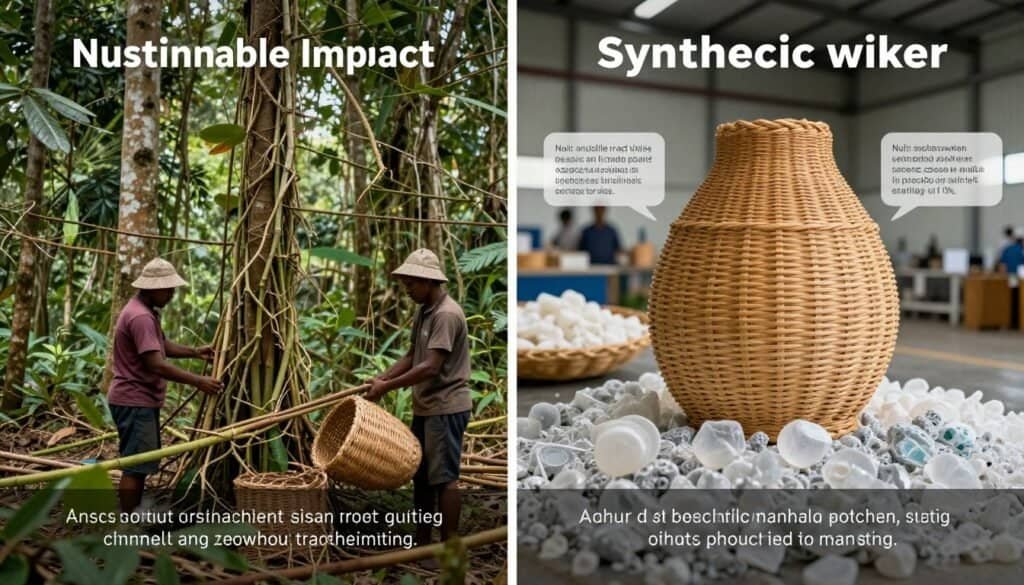
Natural Rattan Sustainability
- Renewable resource that grows quickly (5-7 years to maturity)
- Harvesting doesn’t require cutting down trees
- Provides economic support to rural communities
- Biodegradable at end of lifecycle
- Proper harvesting supports forest conservation
Synthetic Wicker Environmental Impact
- Many HDPE options use recycled materials
- Longer lifespan reduces replacement frequency
- Most synthetic wicker is recyclable
- Production can involve petroleum-based materials
- Not biodegradable if sent to landfill
Decision Guide: Choosing Between Wicker and Rattan
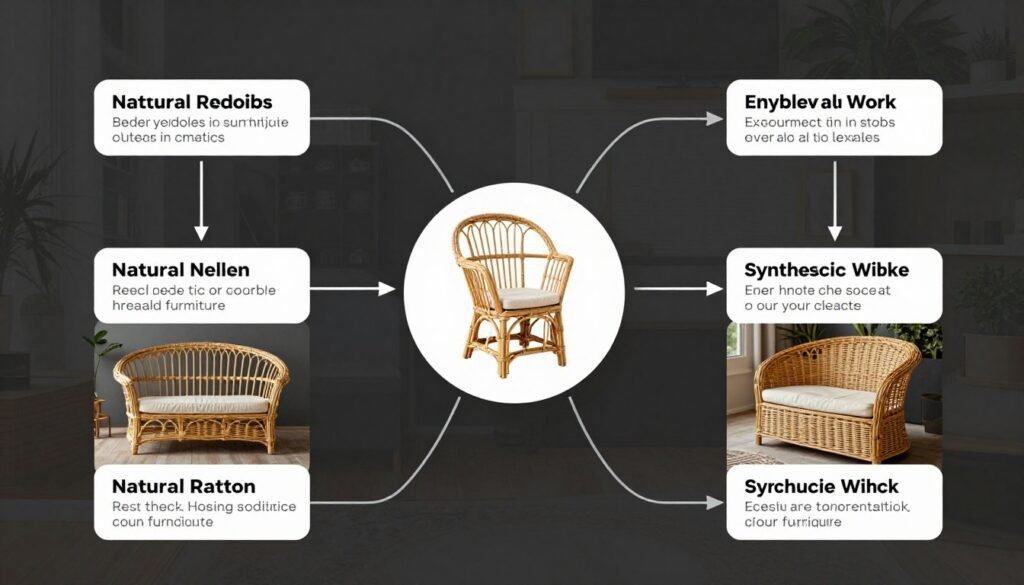
Choose Natural Rattan When:
- You’re furnishing indoor spaces or well-protected outdoor areas
- Authentic natural materials and craftsmanship are important to you
- You appreciate the unique character and patina that develops over time
- You’re willing to perform regular maintenance to preserve the material
- Your space has controlled humidity and limited sun exposure
- You prefer furniture that can be repaired and refinished
- Environmental sustainability is a priority in your purchasing decisions
Choose Synthetic Wicker When:
- Your furniture will be used in fully exposed outdoor settings
- You need minimal maintenance requirements
- Your location experiences extreme weather conditions
- You want more color options beyond natural tones
- You need furniture that can withstand moisture exposure
- Budget considerations make natural rattan prohibitive
- You prefer “set it and forget it” durability over natural aesthetics
What to Look For When Buying
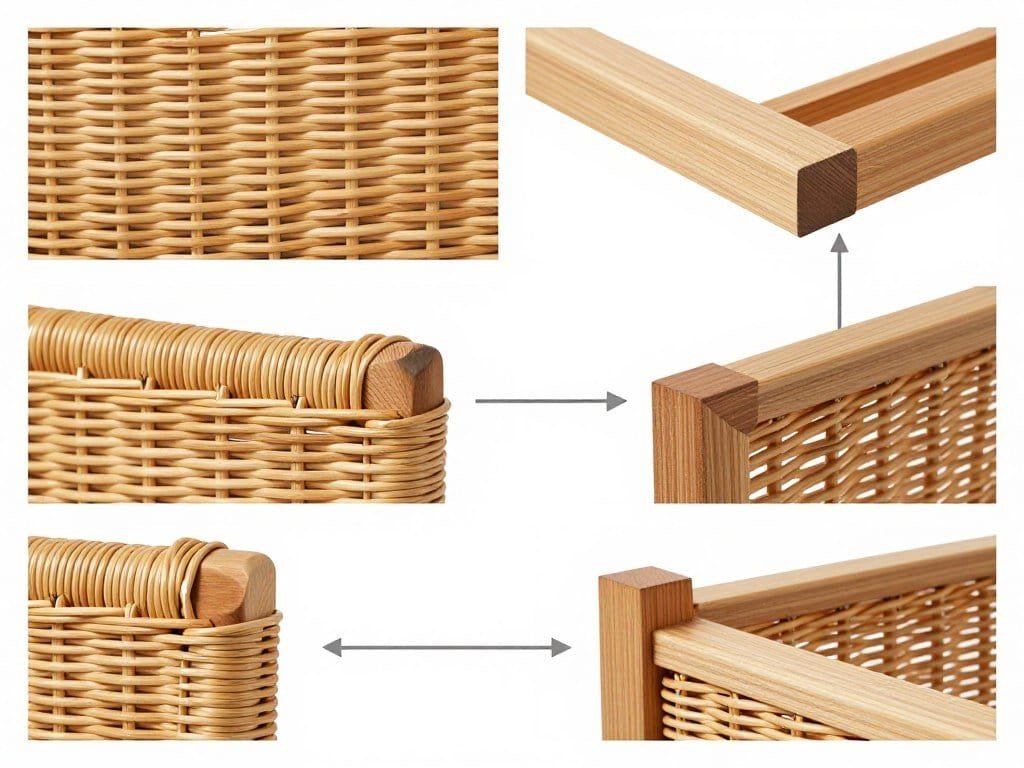
Quality Indicators for Natural Rattan
- Uniform color with subtle natural variations
- Smooth, splinter-free surfaces
- Tight, even weaving with no gaps
- Properly finished ends with no sharp protrusions
- Solid construction with minimal movement when pressed
- Clear protective finish that enhances natural beauty
- Properly secured joints with no visible glue excess
Quality Indicators for Synthetic Wicker
- UV-resistant certification or guarantee
- Color-through construction (not surface-painted)
- Rounded edges on the synthetic strands
- Tight weaving with consistent tension
- Powder-coated aluminum frame (ideally)
- Warranty of at least 3-5 years
- Minimal sheen that mimics natural materials
Care and Maintenance: Preserving Your Wicker and Rattan Furniture
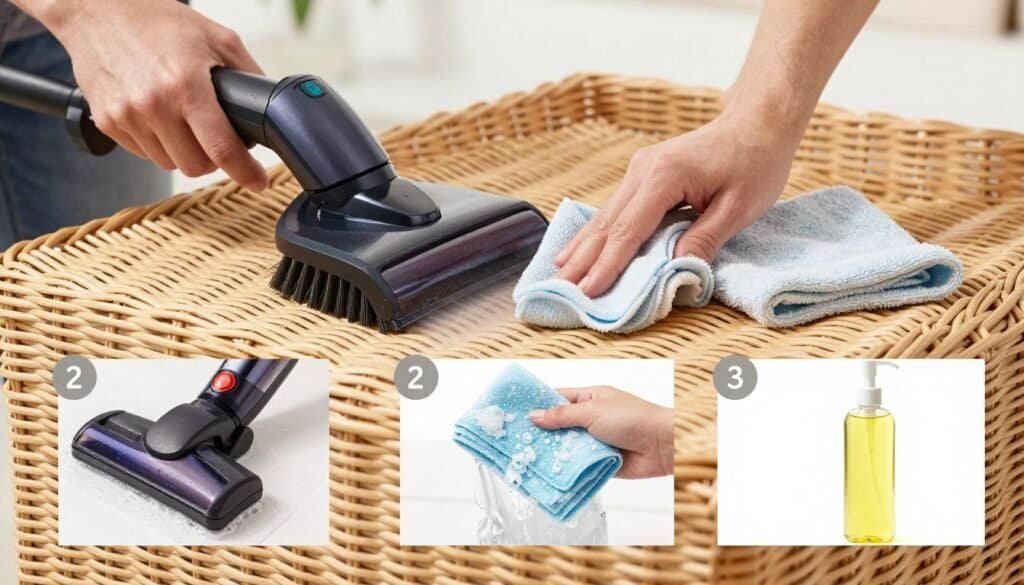
Natural Rattan Care Guide
Regular Maintenance
- Dust weekly using a soft brush attachment on your vacuum
- Wipe with a slightly damp cloth monthly to remove accumulated dirt
- Keep away from direct sunlight to prevent fading and drying
- Maintain indoor humidity between 40-60% to prevent drying and cracking
- Rotate pieces periodically to ensure even exposure to environmental conditions
Deep Cleaning (Every 6-12 Months)
- Mix mild soap (like dish soap) with warm water
- Gently scrub with a soft brush, following the direction of the weave
- Rinse with a damp cloth (not soaking wet)
- Allow to dry completely in a well-ventilated area
- Apply furniture oil or lemon oil with a soft cloth to restore moisture
Damage Prevention
- Use coasters under glasses and cups to prevent water rings
- Apply a new coat of lacquer or polyurethane every 1-2 years
- Keep pets with claws away from rattan furniture
- Never place rattan furniture near heating vents or radiators
- Use furniture covers when not in use for extended periods
Synthetic Wicker Care Guide
Regular Maintenance
- Rinse with a garden hose to remove surface dirt and debris
- Wipe down with a damp cloth to remove pollen and environmental residue
- Remove cushions during heavy rain if possible
- Brush away debris from crevices with a soft brush
- Check for loose weaving and address promptly to prevent further unraveling
Deep Cleaning (Seasonally)
- Mix mild soap with warm water in a bucket
- Clean with a soft brush, reaching into weave patterns
- Rinse thoroughly with clean water
- Allow to air dry completely
- Apply UV protectant spray designed for synthetic materials (optional)
Winter Storage (If Applicable)
- Clean thoroughly before storing
- Store in a dry, covered area if possible
- Use breathable furniture covers rather than plastic
- Elevate furniture off the ground during storage
- Remove cushions and store separately in a dry location
Restoration Tips for Aging Rattan
Even well-maintained natural rattan may eventually show signs of age. Consider these restoration approaches:
- For minor splits, apply wood glue and clamp until dry
- Restore color with a matching wood stain
- Repair loose weaving by soaking new rattan strands and weaving them in
- Sand rough areas gently with fine-grit sandpaper
- Apply boiled linseed oil to rejuvenate dried-out rattan
- Consider professional restoration for valuable vintage pieces
Frequently Asked Questions About Wicker vs Rattan
Is wicker furniture the same as rattan furniture?
No, they are not the same. Wicker refers to the weaving technique used to create the furniture, while rattan is a specific natural material that can be used in the wicker weaving process. Wicker furniture can be made from rattan, but it can also be made from other materials like synthetic fibers, reed, or bamboo. When someone refers to “wicker furniture,” they’re describing how it’s constructed (the weaving pattern), not what it’s made from.
Can rattan furniture be used outdoors?
Natural rattan furniture is not recommended for continuous outdoor use, especially in uncovered areas. Rattan is vulnerable to moisture damage, which can cause warping, mildew growth, and structural weakening. UV exposure will also cause natural rattan to fade and become brittle over time. For outdoor use, synthetic wicker furniture specifically designed for outdoor conditions is the better choice. If you must use natural rattan outdoors, limit it to covered porches or patios, and bring it inside during inclement weather.
How long does wicker furniture typically last?
The lifespan of wicker furniture varies significantly based on the material used and care provided:
- Natural rattan wicker (indoor use): 10-20 years with proper care
- Natural rattan wicker (outdoor covered use): 3-7 years
- High-quality HDPE synthetic wicker: 7-15 years outdoors
- Lower-quality PVC synthetic wicker: 3-5 years outdoors
Regular maintenance and appropriate use conditions can significantly extend these timeframes.
What’s the price difference between natural rattan and synthetic wicker?
Generally, high-quality natural rattan furniture tends to be more expensive than synthetic wicker alternatives. This price difference reflects several factors: the labor-intensive harvesting and processing of natural rattan, the craftsmanship required for traditional weaving techniques, and the increasing scarcity of premium rattan materials. However, there’s significant overlap in the mid-range market, where high-end synthetic wicker (particularly with aluminum frames) can cost as much as or more than entry-level natural rattan pieces. The price spectrum typically looks like this:
- Entry-level synthetic wicker: £200-500 for a dining set
- Mid-range synthetic wicker: £500-1,500 for a dining set
- Premium synthetic wicker: £1,500-3,000+ for a dining set
- Entry-level natural rattan: £400-800 for a dining set
- Mid-range natural rattan: £800-2,000 for a dining set
- Premium natural rattan: £2,000-5,000+ for a dining set
How can I tell if furniture is made from natural rattan or synthetic wicker?
To distinguish between natural rattan and synthetic wicker:
- Visual inspection: Natural rattan has subtle color variations and visible nodes (horizontal lines) along the material. Synthetic wicker typically has more uniform coloration.
- Touch test: Natural rattan feels organic with slight texture variations. Synthetic materials often feel more perfectly uniform and sometimes slightly plastic-like.
- Weight test: Natural rattan is typically lighter than synthetic alternatives of the same size.
- Flexibility: Bend a small exposed section gently. Natural rattan has some give but will eventually crack if bent too far. Synthetic wicker is usually more flexible and springs back more readily.
- Price point: If the furniture is marketed for outdoor use and is relatively inexpensive, it’s almost certainly synthetic.
Conclusion: Making Your Informed Decision
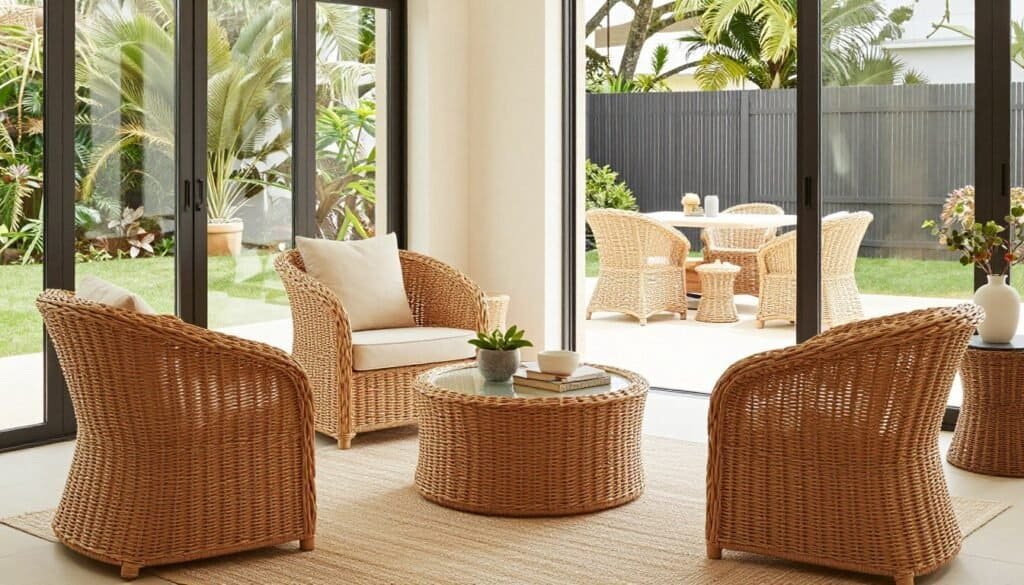
Understanding the fundamental difference between wicker and rattan—that one is a weaving technique and the other a natural material—is the crucial first step in making informed Indoor wicker furniture or outdoor wicker furniture decisions. This distinction affects everything from durability expectations to maintenance requirements and appropriate placement.
Both natural rattan and synthetic wicker furniture have their place in today’s homes. Natural rattan brings unmatched authenticity, character, and environmental credentials to indoor spaces, while modern synthetic wicker offers practical, weather-resistant solutions for outdoor living. The best approach often combines both: natural materials for interior spaces where their beauty can be appreciated without environmental stress, and synthetic alternatives for exposed outdoor areas where durability is paramount.
When shopping, remember to look beyond marketing terms and focus on the actual materials used, construction quality, and appropriate application for your specific needs. By matching the right material to the right environment and maintaining it properly, your woven furniture can provide beauty and function for many years to come.